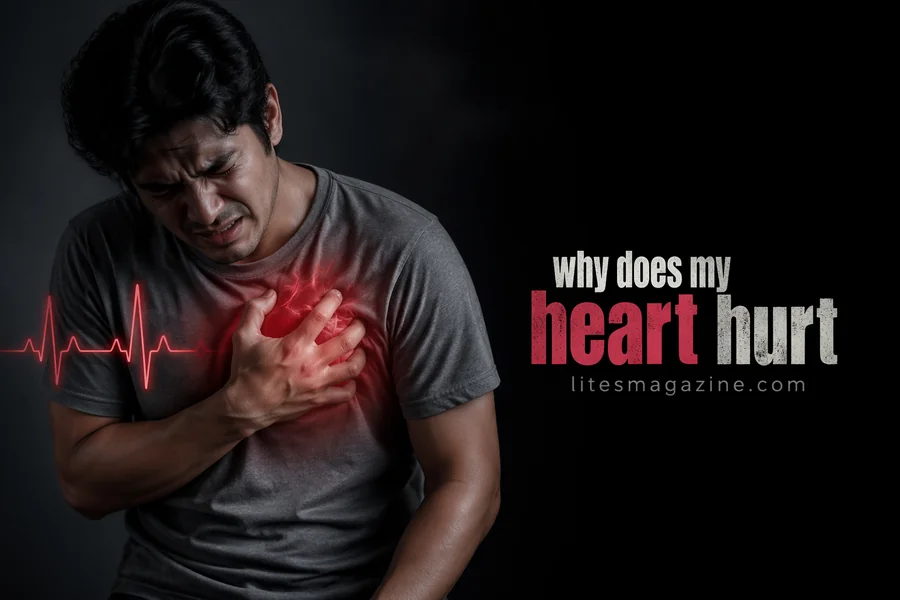
If you’re asking “why does my heart hurt”, your first thought might be fear. That’s normal. Chest pain gets attention fast. But here’s the key point:
Heart pain is not always a heart problem. It can come from stress, digestion, muscles, or lungs. In some cases, though, it can signal a medical emergency.
This guide gives you clear answers, fast checks, and the exact steps to take.
Why Does My Heart Hurt?
Heart pain can be caused by:
- Heart conditions like heart attack or angina
- Anxiety or panic attacks
- Acid reflux or gas
- Muscle strain in the chest
- Lung problems
Seek urgent help if the pain feels like pressure, spreads to your arm or jaw, or comes with breathing trouble.
What Heart Pain Actually Feels Like
Not all chest pain feels the same. The way it feels gives clues.
- Pressure or tightness
- Sharp or stabbing pain
- Burning sensation
- Heavy or squeezing feeling
- Pain that spreads to arm, neck, or back

Main Causes of Heart Pain (Ranked by Importance)
1. Heart-Related Causes (Do Not Ignore)
Heart Attack
This is the most serious cause.
Common symptoms:
- Strong chest pressure
- Pain spreading to left arm, jaw, or back
- Shortness of breath
- Cold sweat or nausea
⛔ Action: Call emergency services immediately.
Angina (Reduced Blood Flow)
- Feels like squeezing or pressure
- Triggered by activity or stress
- Improves with rest
2. Anxiety and Panic Attacks (Very Common)
Many people searching “why does my heart hurt” are dealing with stress.
Symptoms:
- Fast heartbeat
- Tight chest
- Short breathing
- Sudden fear
???? Important: This pain is real, but not caused by blocked arteries.
3. Acid Reflux (Often Misunderstood)
Acid reflux can feel like heart pain.
Key signs:
- Burning in chest
- Pain after eating
- Worse when lying down
- Sour taste
4. Muscle Strain (Simple but Common)
- Caused by lifting, posture, or movement
- Pain increases when pressing the chest
- Sharp or localized
???? Usually harmless and improves with rest.
5. Lung Conditions (Less Common but Serious)
- Sharp pain when breathing
- Shortness of breath
- Sudden chest discomfort
⛔ Needs medical attention if severe.
Read Also: Why Does the Tip of My Tongue Hurt? 9 Surprising Causes
Emotional Heart Pain (The “Heavy Chest” Feeling)
Emotional stress can trigger physical pain.
You may feel:
- Tight chest
- Deep ache
- Low energy
This is linked to your nervous system. It is not “just in your head.”
???? When Should You Worry? (Clear Warning Signs)
Get immediate help if you have:
- Chest pressure lasting more than a few minutes
- Pain spreading to arm, jaw, or back
- Trouble breathing
- Cold sweating
- Dizziness or fainting
???? Do not wait or guess.
Heart Pain vs Other Chest Pain (Fast Comparison)
| Symptom Pattern | Most Likely Cause |
| Pressure + sweating | Heart problem |
| Burning after eating | Acid reflux |
| Pain with movement | Muscle strain |
| Pain during stress | Anxiety |
| Sharp pain breathing | Lung issue |
What to Do If Your Heart Hurts (Step-by-Step)
If you suddenly feel pain and think “why does my heart hurt,” follow this:
Step 1: Stop and Sit Down
Rest reduces strain on your body.
Step 2: Check Symptoms
Look for spreading pain, breath issues, or sweating.
Step 3: Control Breathing
Slow, deep breaths can reduce panic-related pain.
Step 4: Try Position Change
Sit upright if it feels like burning or pressure.
Step 5: Call for Help if Unsure
It’s always safer to check.
Read More: Why Do People Drool in Their Sleep? 7 Surprising Reasons You Should Know
How To Prevent Heart Pain (Simple Daily Fixes)
Build Better Habits
- Eat lighter meals at night
- Stay active daily
- Sleep 7–8 hours
- Stay hydrated
Reduce Stress Triggers
- Take short breaks
- Limit caffeine
- Avoid constant screen time
Avoid Known Causes
- Smoking
- Heavy oily foods
- Late-night eating
Daily Habits For Heart Health
1. Eat Simple, Balanced Meals
Consider vegetables, fruits, whole grains and lean protein. Attempt to minimize fried foods, sugar, and processed snacks. Even-balanced smaller meals may also help to avoid heart and digestive stress.
2. Stay physically active
Strive to have 20-30 minutes of activity every day. Stretching, light jogging, walking or cycling is fine to keep your heart strong and to boost blood flow. It is more a matter of consistency than intensity.
3. Deal with stress on a daily basis
Stress on the health of the heart is more than what many people perceive. Slow breathing, short pauses and non overthinking. Even relaxation, 5-10 minutes a day can reduce the tightness of the chest, and improve the overall heart performance.
4. Sleep and hydration matter
Take plenty of water in the day and sleep 7-8 hours. Sleep deprivation and dehydration may cause additional loads on the heart and leave a human being with fatigue.
How To Calm Panic Attacks Fast
1. Slow your breathing immediately
Start by controlling your breath. Breathe slowly through the nose, 4 seconds, hold 4 seconds, and then inhale slowly through your mouth 6-8 seconds. This can be used to slow your heart rate and is an indicator to your body that you are not in danger.
2. Get rooted in the here and now
Pay attention to your surroundings. Name 5 objects that you can see, 4 ones that you can touch, 3 objects that you can hear, 2 objects that you can smell, and 1 object that you can taste. This takes your mind off of fear and onto reality.
3. Step by step relaxation of the body
Take the strain out of your shoulders, jaw, and hands. Sit down if possible and keep your body still. Panic is exacerbated by tight muscles, and therefore to alleviate the symptoms it is beneficial to relax the muscles.
4. Remind yourself that It will pass
Panic attacks are severe, yet short-lived. Make it clear to yourself that the sensation will be at its peak and then pass in a few minutes. This will ease the fear and your body will relax quicker.
Chest Pain Warning Signs You Should Never Ignore
1. Pressure or tightness in the chest
When you experience the heavy pressure, squeeze, tightness in the central part of your chest, consider it seriously. This kind of pain is occasionally associated with a decrease in blood flow to the heart particularly when it takes over a few minutes or occurs during rest or exercise.
2. Extensive pain to other regions
Pain in the chest that radiates to your left arm, jaw, neck, shoulder or back is a big red flag. This trend is even worrisome compared to pain that remains in the same location and must not be overlooked.
3. Dizziness or shortness of breath
Angina Chest pain accompanied by difficulty breathing, feeling lightheaded, cold sweat or nausea can be a sign of an issue of great concern to the heart. The combination of these symptoms needs immediate medical care.
4. Acute or intensive pain
Any sharp, acute chest pain, which does not coincide with the usual pain, must be an emergency. The sooner one is checked the better.
Final Thoughts
When you continue to ask yourself why does my heart hurt, the answer is based on your symptoms, when, and what triggers it. Others are mere causes. There are those who need immediate treatment.
Hear your body. Watch patterns. And when something is wrong, seek assistance.
It is never too early to check rather than be sorry to wait.
*Disclaimer: This information is not medical advice and does not substitute medical advice. In case of severe or persistent symptoms, seek the attention of a qualified healthcare provider.
FAQs:
Why does my heart hurt randomly?
Random heart pain is often caused by anxiety, gas, or muscle strain. Track when it happens to find patterns.
Why does my heart hurt when I am sad?
Emotional stress can tighten chest muscles and affect breathing, which creates real pain.
Why does my heart hurt when I breathe?
Pain while breathing may be linked to lung issues or muscle strain. Sharp pain should be checked.
Can anxiety cause heart pain daily?
Yes. Ongoing stress can lead to repeated chest tightness and discomfort.
Is heart pain always serious?
No. Many cases are harmless. But strong, lasting, or spreading pain should never be ignored.
Read More Articles: Why Do My Teeth Hurt All of a Sudden? Causes & Quick Fixes That Work