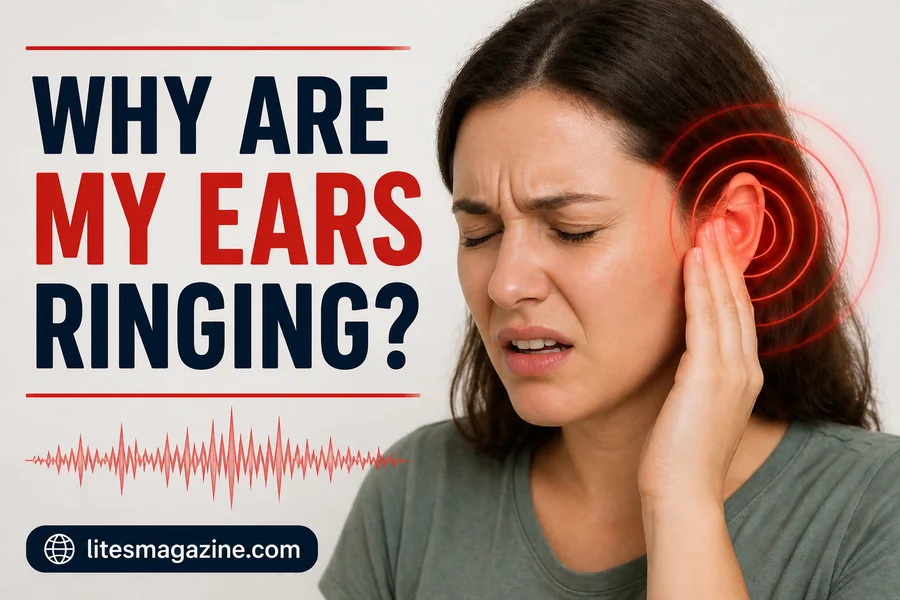
You are sitting in a quiet room. No music. No TV. And still– there is a sound. A buzzing sound, a high pitch hissing, or a ringing in the ear, which is inside your own head. And wondering yourself why are my ears ringing, you are not alone. It ranks among the most prevalent health complaints in the world and most individuals do not have the slightest idea as to what is actually going on.
This article addresses it all, what the ringing is, why it occurs, what makes it worse and what you can do about it.
Why Are My Ears Ringing? The Short Answer
Why are my ears ringing? Ear ringing is a medical term known as tinnitus. It is not an illness, it is a symptom. It may sound like ringing, clicking, pulsing, humming or rushing & all the sounds are inside your head. They cannot be heard by anybody.
One out of every 15 people in the world experiences tinnitus – or more than 50 million individuals in the United States alone. Then when your ears are ringing you have a very great company.
The tricky part? No one cares. Tinnitus is an indication that there is something else happening and the difference is how to determine what it is.
What Does Ear Ringing Actually Sound Like?
People describe it differently. For many it’s a ringing sound. For others it’s whistling, buzzing, chirping, hissing, humming, roaring, or even shrieking.
The sound may come from one ear, both ears, or from inside your head. It can be constant or come and go. Soft or loud. High-pitched or low.
Some people barely notice it. Others find it so disruptive that it affects sleep, concentration & mood. It really does vary that much.

The Most Common Reasons Your Ears Are Ringing
1. Loud Noise Exposure
This is the number one cause — and the most preventable. Tinnitus starts in the inner ear, most often caused by damage to or loss of sensory hair cells in the cochlea. Once those hair cells are damaged, they don’t grow back.
Virtually everybody had a brief tinnitus following exposure to very loud noise. Short time ringing in the ears can be caused by attending a loud concert such as. It normally disappears within hours or a day. However, it can be permanent through repeated exposure with time.
Common sources: concerts, power tools, factory noise, earphones at high volume, gunshots, and heavy machinery.
2. Age-Related Hearing Loss
About 1 in 3 adults over age 65 develop ringing in their ears. As hearing naturally declines with age, the brain starts compensating for the reduced input — and sometimes that compensation creates phantom sounds.
“Tinnitus usually comes from hearing loss. The brain has lost input, so you can think of it as the brain overcompensating for the lack of audio signal from the ear,” explains Dr. William James Azeredo, an ENT specialist.
3. Earwax Blockage
This one is easy to miss because it has nothing to do with hearing loss or nerve damage. Blockages in the ear canal can cause pressure to build up in the inner ear, affecting the eardrum and triggering the perception of tinnitus symptoms.
The fix is simple — get the wax removed by a doctor. Do not try to remove it yourself with a cotton swab. That tends to push the wax further in and make things worse.
4. Medications
It might be your medicine that causes your ears to ring, and it is not as rare as most people think. Some medications associated with tinnitus are non-steroidal anti-inflammatory drugs such as ibuprofen, naproxen and aspirin, some antibiotics, anti-cancer drugs, anti-malaria drugs & antidepressants – particularly at high doses.
The tinnitus disappears in the majority of cases with the discontinuation of the medication. Do not just quit any prescribed medication without consulting your doctor first, but be sure to mention the ringing on your next visit.
5. Ear Infections or Sinus Problems
The normal hearing is affected by an abnormal pressure in the middle ear that may occur due to nasal congestion caused by a severe cold, flu, or sinus infection and leads to the symptoms of tinnitus.
This kind of ringing is not long lasting. As soon as the infection has been cleared and the pressure is brought into normalcy, the ringing is usually accompanied by it.
6. Jaw Problems (TMJ)
This comes as a surprise to many. The temporomandibular joint (TMJ) – where the lower jaw joins to the skull – is directly over the ears. Trauma to the muscles, ligaments or cartilage of the TMJ may cause symptoms of tinnitus due to its common innervation with the middle ear structures.
The TMJ disorder can be remedied in most instances to relieve or eliminate the tinnitus. When you grind your teeth or when you feel pain in your jaw with the ringing then this is worth investigating.
7. High Blood Pressure and Blood Vessel Issues
Some people hear their heartbeat inside the ear — a phenomenon called pulsatile tinnitus. It’s more likely in older people because blood flow tends to be more turbulent in arteries whose walls have stiffened with age.
This sensation can be caused by more serious problems including a benign tumor, middle ear infections, high blood pressure, blocked arteries, or stroke. Pulsatile tinnitus — where the ringing pulses in time with your heartbeat — is a specific type that always warrants a doctor visit.
8. Head or Neck Injuries
A head or neck injury can damage structures of the ear, the nerve that carries sound signals to the brain, or areas of the brain that process sound — all of which can cause tinnitus.
People who develop tinnitus after an injury usually only have ringing in one ear. This is different from the bilateral ringing that comes with hearing loss or medication side effects.
Read Also: Why Do I Feel Dizzy? Top 3 Common Causes Of Dizziness
Quick Reference: Common Causes At A Glance
| Cause | Type of Ringing | Temporary or Ongoing |
| Loud noise (one-time) | High-pitched ring | Usually temporary |
| Repeated noise exposure | Constant hiss or ring | Can become permanent |
| Age-related hearing loss | Steady hum or ring | Ongoing |
| Earwax blockage | Muffled ring or buzz | Temporary (once removed) |
| Medications | Varies | Usually clears when stopped |
| Ear/sinus infection | Pressure + ringing | Temporary |
| TMJ disorder | Clicking + ringing | Improves with treatment |
| High blood pressure | Pulsating whoosh | Depends on treatment |
| Head or neck injury | Often one-sided | Varies |
What Makes Ear Ringing Worse?
Though you might already have tinnitus, there are things that can make it go up to 11. Caffeine may elevate blood pressure, which results in tinnitus being more prominent. It can also be provoked or aggravated by taking ibuprofen too frequently.
Another one is stress. The stress can aggravate tinnitus – and the ringing itself is a source of stress, which in turn increases the volume of the ringing. It is a vicious cycle that cannot be easily broken.
It is even aggravated by the silence. When the world itself is quiet, then your mind is focused on the noise inside. This is why tinnitus can always be more noticeable in the night when you are lying in bed and you have less external noises that are masking the tinnitus.
Is Ear Ringing Dangerous?
No. Tinnitus is not life threatening in most cases. It is a symptom of other issues, not a disease in itself, however, and can be disabling to others.
That said, some situations do need urgent attention. See a doctor right away if:
- The ringing starts suddenly in one ear only
- You experience dizziness or vertigo alongside the ringing
- You have sudden hearing loss in one ear
- The sound pulses in time with your heartbeat
- The ringing follows a head injury
A combination of ringing, dizziness, and vertigo together can signal Ménière’s disease. And pulsatile tinnitus — where you hear a whooshing with your heartbeat — can in rare cases indicate a tumor or blood vessel damage.
Read Also: Why Do I Keep Biting My Cheek? 7 Hidden Causes You Didn’t Know
How To Get Relief From Ear Ringing
There’s no universal cure for tinnitus. But there are proven ways to reduce how much it affects your daily life.
Sound Therapy
The tinnitus sound can be canceled by creating a background hum especially during the nights. An evaporator humidifier (cool mist) in winter, or a fan in summer, will be effective. A mellow tune provides your brain with an alternative way to think besides the ringing.
Hearing Aids
Hearing aids may increase the intensity of outer noises in order to cover the tinnitus. This is one of the most effective options, in case hearing loss is the underlying cause.
Cognitive Behavioural Therapy (CBT)
CBT sessions will teach you how to respond differently to tinnitus, and reframe the situation. CBT also has the ability to assist with the depression and anxiety brought about by tinnitus, and learns breathing and muscle relaxation skills.
Tinnitus Retraining Therapy (TRT)
TRT involves counselling and use of sound masking equipment. A specialist in ENT or audiologist may assist you in the process of learning how to live with tinnitus in the long-term.
Reduce Triggers
Reduce caffeine. Manage stress. Keep your ears safe in noisy places. Do not remain quiet with low background sound in the night. These are minor ones which actually count in the long run.
When Should I Worry About Ringing In My Ears?
Worry if you notice any of these:
| Warning Sign | Why It Matters |
| Ringing in one ear only | Could signal a nerve or structural issue |
| Pulsing beat in sync with your heart | May indicate a blood vessel problem |
| Sudden hearing loss alongside ringing | Medical emergency — act within 72 hours |
| Ringing after a head injury | Needs immediate evaluation |
| Lasts more than a week | Not normal — get it checked |
| Comes with dizziness or vertigo | Could be Meniere’s disease or inner ear disorder |
The simple rule: If it started suddenly, affects one ear, or comes with hearing loss or dizziness — don’t wait. See a doctor.
Most ringing is harmless. Those specific signs are not.
When Should You See A Doctor About Ear Ringing?
In case the ringing continues over a few weeks, see your primary care doctor. You can be directed to an ENT specialist who will request a hearing test known as audiogram to confirm hearing loss due to nerves.
Your physician will also examine your medical history and medications to determine the cause of the tinnitus to be an underlying condition or medication.
Don’t delay in case the ringing is new, unilateral, or is accompanied with other symptoms. Early testing presents you with greater choices.
Why Are My Ears Ringing? — Final Summary
So, why are my ears ringing? Here’s the plain-language version of everything above:
- Ear ringing (tinnitus) is not a disease, but a symptom.
- These are most frequently caused by noise exposure, hearing loss & earwax.
- It can be caused by medications, infections, jaw issues, and blood pressure.
- Pulsatile tinnitus (heartbeat rhythm) requires immediate medical care.
- The most effective management tools are sound therapy, CBT & hearing aids.
- Visit a doctor when the ringing persists longer than several weeks or is accompanied by other symptoms.
The ringing in your ears is your body saying there is something to listen to. It does not necessarily imply something serious – but it always implies something. Begin with the glaring reasons, eliminate them one by one and consult an expert whether it lingers.
FAQs:
Q1: Why are my ears ringing?
A: Ear ringing — called tinnitus — is usually caused by noise exposure, earwax buildup, ear infections, hearing loss, stress, or certain medications. It’s a symptom, not a disease.
Q2: How can I get my ears to stop ringing?
A: Treat the root cause first. For temporary ringing, rest in a quiet space. White noise, reducing caffeine, and managing stress can help. Persistent tinnitus needs a doctor’s assessment.
Q3: Is ringing in the ears a warning?
A: Usually not. But see a doctor if it lasts over a week, affects one ear only, pulses with your heartbeat, or comes with hearing loss or dizziness.
Q4: Why are my ears ringing after a concert?
A: Loud sound damages the tiny hair cells in your inner ear. This causes temporary tinnitus. It usually clears within 24 hours. Repeated exposure can cause permanent damage.
Q5: Why are my ears ringing at night?
A: Background noise drops at night so tinnitus feels louder. The sound itself hasn’t changed — your brain just has less to focus on. A white noise machine or fan helps.
Q6: Can stress cause ear ringing?
A: Yes. Stress and anxiety put your nervous system on high alert, which can trigger or worsen tinnitus. Many people notice ringing gets louder when they’re sleep-deprived or anxious.
Read More Articles: Why Do I Keep Biting My Cheek? 7 Hidden Causes You Didn’t Know