What is the strongest animal in the world? This question has fascinated scientists, wildlife enthusiasts, and curious minds for generations.
The answer isn’t as straightforward as you might think. Strength in the animal kingdom manifests in diverse forms—from sheer lifting power to incredible bite force, and from proportional strength to endurance.
While elephants can uproot trees and gorillas display raw muscular power, the true champions of strength might surprise you.
Some are tiny insects capable of pulling loads over 1,000 times their body weight, while others are massive predators with bone-crushing jaws.
Table of Contents
Understanding Animal Strength: More Than Just Size
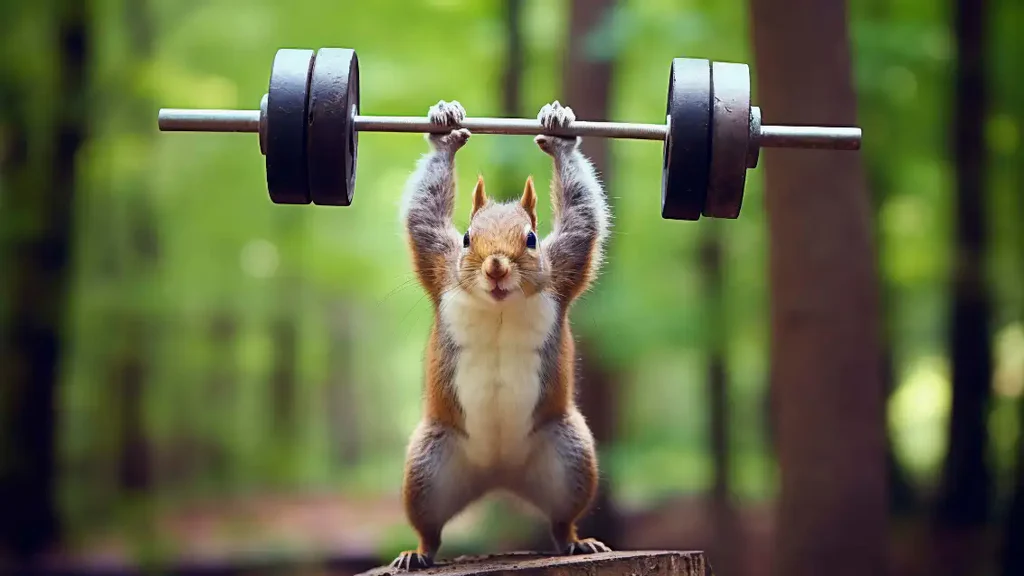
Strength in the animal kingdom cannot be measured by a single metric. Different animals excel in different categories of power.
Absolute strength refers to the total weight an animal can lift or move. Large animals like elephants naturally dominate this category due to their massive size and muscle mass.
Relative strength, or pound-for-pound strength, compares an animal’s lifting capacity to its body weight. This is where smaller creatures often outperform giants, showcasing incredible power ratios.
Bite force measures the pressure an animal’s jaws can exert, crucial for predators that need to crush bones or hold struggling prey. Reptiles particularly excel in this category.
Muscular endurance represents the ability to maintain strength over extended periods. Animals like oxen and musk oxen demonstrate exceptional endurance in pulling heavy loads across difficult terrain.
The Undisputed Champion: African Bush Elephant
The African bush elephant holds the title of the strongest animal in the world in terms of absolute strength. These magnificent giants can lift approximately 13,230 pounds (6,000 kg), which is roughly equivalent to their own body weight.
An adult male African elephant can weigh up to 13,000 pounds, making it the largest land animal on Earth. Their immense size is matched by extraordinary power throughout their entire body.
The elephant’s trunk alone contains over 40,000 muscles and can lift up to 770 pounds (350 kg). This versatile appendage serves as both a powerful lifting tool and a delicate instrument for picking up small objects.
Elephants use their incredible strength to uproot trees, move massive obstacles, and defend against predators. They can push down trees, dig for water in dry riverbeds, and carry heavy logs with apparent ease.
Their tusks, which are actually elongated incisor teeth, can lift objects weighing up to 2,000 pounds. These ivory protrusions serve as both tools and weapons in the elephant’s arsenal.
Despite their massive size, elephants are remarkably intelligent animals. They demonstrate problem-solving abilities, show empathy for herd members, and can even recognize themselves in mirrors.
Pound-for-Pound Champion: The Dung Beetle
While elephants dominate in absolute strength, the dung beetle claims victory in proportional strength. This humble insect can pull objects over 1,141 times its own body weight.
To put this in perspective, if a human possessed equivalent strength, they could lift approximately 80 tons—the weight of six double-decker buses. This incredible feat makes the dung beetle the strongest animal relative to its size.
The species Onthophagus taurus demonstrated this remarkable strength in laboratory studies conducted by researchers from the University of London and the University of Western Australia. The findings confirmed what scientists had long suspected about these tiny powerhouses.
Dung beetles use their extraordinary strength to roll balls of dung for feeding and reproduction. Male beetles also use their power in fierce battles over mates and territory.
Their strength comes from specialized muscle structures, particularly in their legs and thorax. Their exoskeleton provides attachment points for more muscles than internal skeletons allow.
These beetles play a crucial ecological role by breaking down animal waste and recycling nutrients back into the soil. Their strength is essential for survival in competitive environments where food sources must be quickly secured.
Rhinoceros Beetle: Another Tiny Titan
The rhinoceros beetle can lift up to 850 times its own body weight. This is equivalent to a human lifting nine adult elephants simultaneously.
These beetles are among the largest insects in the world, with some species reaching up to 7 inches (173 mm) in length. Despite their size, they’re completely harmless to humans.
Male rhinoceros beetles use their impressive strength in battles over mates. Their distinctive horn-like projections help them flip rivals during territorial disputes.
Their robust exoskeleton and powerful muscular structure, especially in the thorax and front legs, enable these incredible feats. The beetle’s entire body is engineered for maximum leverage and power.
Like dung beetles, rhinoceros beetles benefit from chitin-based exoskeletons. This natural polymer is proportionally stronger than bone and allows for greater muscle density.
Gorilla: Strongest Primate
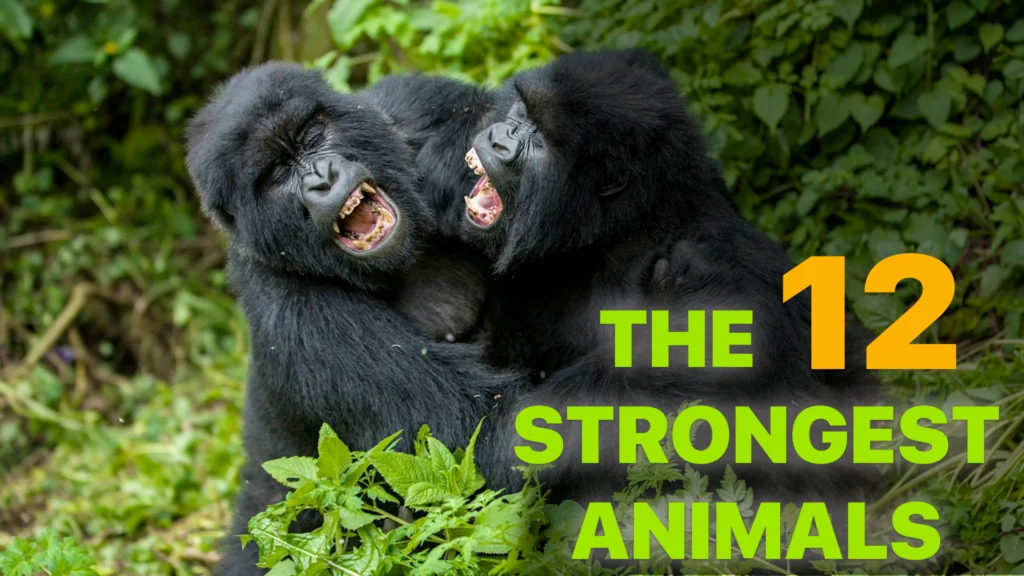
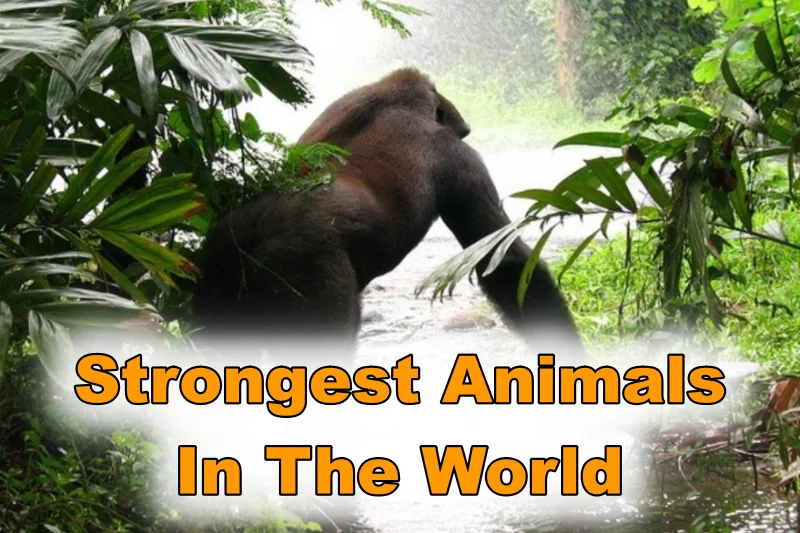
Gorillas showcase the most impressive muscular strength among primates. An adult male gorilla can lift approximately 1,800 pounds (815 kg), which is about 10 times its own body weight.
Adult male gorillas, called silverbacks, can weigh up to 400 pounds and stand nearly 6 feet tall when upright. Their massive arms contain dense muscle fibers developed through constant use.
Gorillas essentially give themselves a continuous workout by using their arms to walk, climb, and swing from trees daily. This keeps their enormous muscles toned and powerful.
Despite their intimidating strength, gorillas are primarily herbivorous, living on a diet of plants, fruits, and occasional insects. They rarely use their power aggressively except when defending their families.
Humans share approximately 98% of their DNA with gorillas. However, gorilla muscles are attached to their skeletons in ways that maximize strength, giving them a significant advantage over humans.
A silverback’s bite force exceeds that of a lion or tiger. Combined with their muscular strength, this makes them formidable when threatened, though they’re generally gentle giants.
Grizzly Bear: Raw Power Personified
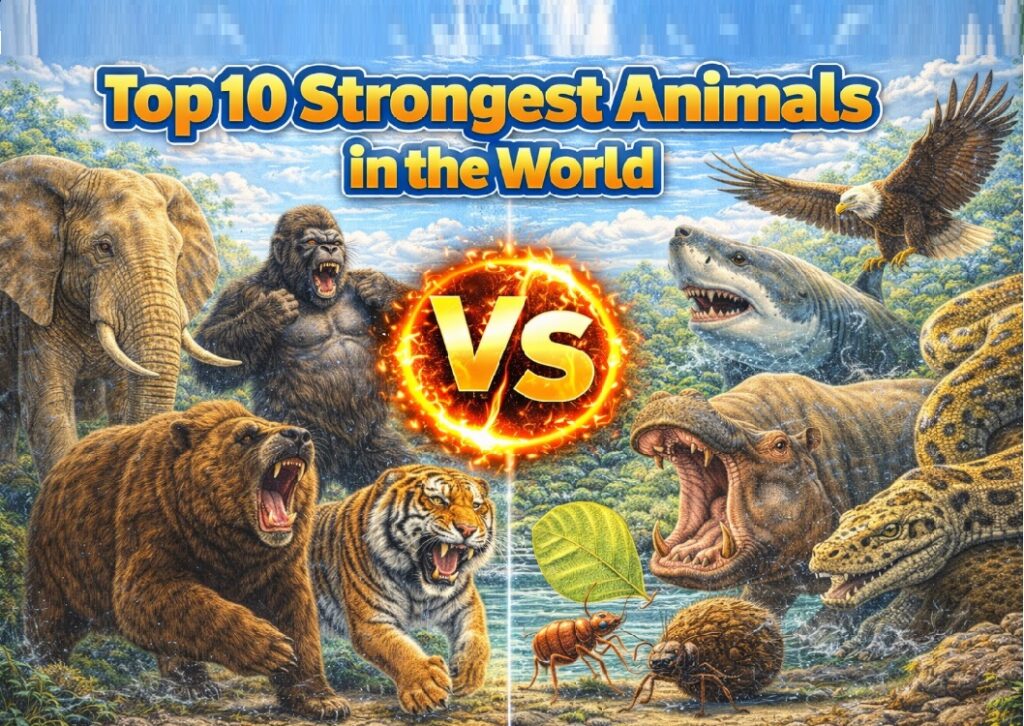
The grizzly bear is a symbol of raw power in the animal kingdom. Adult grizzlies can weigh up to 1,500 pounds (680 kg) and lift approximately 1,100 pounds (500 kg).
Their bite force reaches around 1,160 to 1,200 pounds per square inch (PSI), stronger than a jaguar’s bite. This crushing power allows them to break bones and tear through tough materials.
A 2006 study at Montana State University found that one grizzly bear equaled about 2.5 to 5 humans in strength. This demonstrates their overwhelming physical superiority.
Grizzlies possess massive shoulders and neck muscles that power their digging abilities. They can excavate earth, uproot trees, and dig up roots with their powerful forelimbs and long claws.
Their muscular build enables them to run at speeds up to 35 miles per hour despite their substantial weight. This combination of strength and speed makes them apex predators.
Grizzly bears are omnivores with varied diets including fish, berries, nuts, and large mammals. Their strength allows them to take down prey much larger than themselves.
Polar Bear: Arctic Powerhouse
The polar bear is the largest carnivore on land and one of the strongest bears. Adult males can weigh up to 1,800 pounds (800 kg) and measure up to 10 feet (3 meters) in length.
Their strength is essential for hunting in harsh Arctic conditions. Polar bears can break through thick ice several inches deep to access seals, their primary prey.
Polar bears can pull 600-pound seals from breathing holes in the ice using only their paws. This demonstrates incredible upper body strength and hunting prowess.
Their powerful limbs enable them to swim for miles through frigid waters. They’ve been observed swimming continuously for over 400 miles in search of food and ice platforms.
Polar bears possess a bite force second only to some crocodilians. They use this power to grip and hold onto struggling prey in challenging conditions.
As apex predators in their environment, polar bears face no natural predators. Their strength, combined with their thick fur and fat layers, makes them perfectly adapted to Arctic survival.
Saltwater Crocodile: Strongest Bite Force
The saltwater crocodile possesses the most powerful bite in the animal kingdom, exerting a force of approximately 3,700 pounds per square inch (PSI). Some studies suggest it may reach up to 7,000 PSI.
These massive reptiles can weigh up to 2,200 pounds and measure over 20 feet in length. They’re the largest living reptiles on Earth.
Saltwater crocodiles use their immense jaw strength to crush bones, capture large prey including buffalo and sharks, and perform their infamous “death roll.” This spinning maneuver helps them tear apart prey.
Their bite is so powerful it can snap a small boat in half. Despite this crushing force, crocodiles have relatively weak muscles for opening their jaws.
These apex predators inhabit coastal areas from northern Australia to eastern India and Southeast Asia. They’re equally comfortable in saltwater and freshwater environments.
A 2012 study confirmed saltwater crocodiles have the highest bite force quotient ever recorded for an animal in laboratory settings. This cements their position as the most powerful biters.
Nile Crocodile: Close Second in Bite Power
The Nile crocodile holds an impressive second place for bite force, exerting approximately 5,000 PSI. This allows them to crush the bones of their prey with ease.
These formidable predators can grow up to 15 feet (4 to 5 meters) in length and weigh as much as 1,300 pounds (600 kg). They’re Africa’s largest freshwater predators.
Nile crocodiles are known for their aggressive nature and territorial behavior. They’re responsible for more human attacks than any other crocodilian species.
Their strength isn’t limited to their jaws. Nile crocodiles can use their powerful tails as weapons, capable of knocking prey into the water or stunning animals on the shore.
These reptiles are patient hunters, sometimes waiting days for the perfect opportunity to strike. When they do attack, their bite force ensures prey has little chance of escape.
Tiger: Strongest Big Cat
Tigers are the strongest of all big cats, capable of carrying prey weighing up to 1,210 pounds (550 kg). They can also run at speeds up to 40 miles per hour (65 kph).
Adult male tigers can weigh between 400 to 660 pounds, making them the largest cat species. Their muscular build is optimized for explosive power and agility.
Tigers possess exceptional bite force among cats, allowing them to pierce through the thickest hides and crush vertebrae with a single bite. Their canine teeth can grow up to 3 inches long.
Their strength enables them to take down prey much larger than themselves, including water buffalo, wild boar, and even young elephants. A tiger can drag a carcass several times its weight.
Tigers are solitary hunters who rely on stealth and power rather than pack tactics. Their strength allows them to hunt alone effectively.
Unlike lions, tigers are excellent swimmers and aren’t afraid of water. They use their powerful muscles to swim across rivers and lakes while hunting or traveling.
Harpy Eagle: Strongest Bird
The harpy eagle is the strongest bird in the world, capable of lifting prey weighing up to 40 pounds (18 kg)—approximately double its own body weight. The female is stronger than the male.
These powerful raptors have a wingspan of up to 6.5 feet (2 meters). Their wings are relatively short but incredibly powerful, allowing them to maneuver through dense rainforest canopy.
Harpy eagles possess talons larger than a grizzly bear’s claws. Their grip strength exceeds that of a Rottweiler’s bite, allowing them to snatch monkeys and sloths from tree branches.
Their powerful legs and wings work together to lift and carry heavy prey while in flight. They can fly off with animals weighing half their body weight.
Harpy eagles are apex predators of the Central and South American rainforests. They play a crucial role in controlling tree-dwelling mammal populations.
These eagles have even been documented carrying away small domestic livestock including piglets and young goats, though this behavior is rare and typically occurs when natural prey is scarce.
Leafcutter Ant: Small but Mighty
Leafcutter ants can carry objects 50 times their own body weight using their powerful jaws. This makes them among the strongest insects relative to their size.
These tiny insects, about the length of a pencil eraser, demonstrate remarkable strength as they climb trees and navigate rugged terrain. They carry massive loads of leaves back to their underground colonies.
Leafcutter ants don’t actually eat the leaves they harvest. Instead, they use them to cultivate fungus gardens, which serve as their primary food source.
Their colonies can contain millions of individuals working together. A single colony can strip a tree of all its leaves in a single night.
Like other strong insects, leafcutter ants benefit from exoskeletons made of chitin. This provides more surface area for muscle attachment than internal skeletons.
These ants have evolved specialized jaw muscles and body structures optimized for cutting and carrying. Different castes within the colony have varying sizes and strengths suited to specific tasks.
Musk Ox: Arctic Strength
Musk oxen can lift about 900 kg (approximately 1.5 times their body weight). Weighing up to 900 pounds (410 kg), these Arctic animals demonstrate formidable strength.
Their thick, shaggy coat is one of the densest in the animal kingdom, providing insulation against extreme cold. Under this fur lies substantial muscle mass.
Musk oxen use their powerful head and neck muscles to defend against predators like wolves. During attacks, they form defensive circles with their young protected inside.
Their hooves are so strong they can break through solid ice to access water below. This strength is essential for survival in the harsh Arctic tundra.
Male musk oxen engage in dramatic head-butting battles during mating season, clashing with incredible force. Their thick skulls and powerful neck muscles absorb these massive impacts.
These animals have been used for centuries by indigenous peoples to pull heavy carts across rugged terrain. Their combination of strength and endurance makes them valuable work animals.
White Rhinoceros: Powerful Herbivore
White rhinoceros can pull weights between 800 and 1,100 kg. These massive creatures weigh between 4,400 and 5,300 pounds (2 to 2.5 metric tons).
Despite being herbivores, white rhinos are incredibly powerful. They use their brute force to defend against natural predators and protect their territory.
Their thick skin, which can be up to 2 inches thick, works with their massive size to create an almost impenetrable defense. Few predators dare to attack healthy adult rhinos.
White rhinos have poor eyesight but excellent hearing and sense of smell. When threatened, they can charge at speeds up to 30 miles per hour.
Their horn, made of keratin (the same substance as human fingernails), isn’t used for lifting but serves as a formidable weapon. Rhinos can inflict serious damage with their horns.
The white rhinoceros is listed as “near threatened” by the IUCN, with populations recovering from near extinction due to conservation efforts.
Water Buffalo: Underestimated Power
Water buffalo are the second strongest animals after elephants in terms of absolute strength. They can weigh up to 2,650 pounds (1,200 kg).
These massive animals have exceptional ability to adapt and thrive in varied aquatic and land habitats. They’re particularly adept at plowing through wetlands and muddy terrains.
Water buffalo possess immense strength combined with a surprisingly gentle nature. They’re often domesticated and work closely with humans in agricultural settings.
Their powerful build allows them to pull extremely heavy loads for extended periods. In many Asian countries, water buffalo are preferred over tractors for rice field work.
These animals can swim powerfully and spend much of their time partially submerged in water. This helps them regulate body temperature and avoid biting insects.
Water buffalo demonstrate remarkable endurance, able to work in hot, humid conditions where other draft animals would quickly tire.
Cape Buffalo: African Powerhouse
Cape buffalo, weighing up to 2,000 pounds (900 kg), command respect in the African wilderness. Their strength lies not just in size but in resilience and protective instincts.
These animals are known for their unpredictable and aggressive behavior when threatened. They’re considered one of the most dangerous animals in Africa to humans.
Cape buffalo have massive horns that can span over 3 feet. They use these, combined with their muscular build, to defend against lions, hyenas, and even crocodiles.
When defending their herd or young, Cape buffalo display remarkable courage and coordination. They’ve been known to circle back and attack predators even after escaping.
Their thick hide and powerful muscles allow them to survive attacks that would kill other animals. Cape buffalo have been observed recovering from lion attacks and continuing to thrive.
Hippopotamus: Deceptively Powerful
Despite their round, docile appearance, hippos are incredibly strong and aggressive. Weighing up to 7,000 pounds (3,200 kg), they’re among Africa’s most dangerous animals.
Hippos possess one of the most powerful bites among mammals, with bite force estimated at about 1,800 PSI. Their jaws can snap a canoe in half.
These semi-aquatic mammals can run surprisingly fast on land, reaching speeds up to 30 miles per hour over short distances. This combination of speed and mass makes them extremely dangerous.
Hippos are highly territorial and use their massive size and strength to protect their space in water and on land. They’re responsible for more human deaths in Africa than most other large animals.
Their muscular legs and massive body allow them to walk on river bottoms. They can hold their breath for up to five minutes while submerged.
Despite weighing several tons, hippos can move with surprising agility. They use their strength to establish dominance hierarchies and defend prime territorial waters.
Blue Whale: Oceanic Giant
The blue whale is the largest animal ever to have existed on Earth, weighing up to 200 tons. While it doesn’t compete directly with land animals, its strength is unparalleled in the ocean.
The blue whale’s peduncle muscle, which runs from the dorsal fin to the fluke, is considered the most powerful muscle in the animal kingdom. This muscle propels the massive creature through water.
Blue whales can dive to depths of over 1,000 feet and swim at sustained speeds of 20 miles per hour. When necessary, they can reach burst speeds up to 30 miles per hour.
Their heart alone weighs as much as a small car—approximately 400 pounds. Each heartbeat pumps about 60 gallons of blood through their enormous circulatory system.
Blue whales demonstrate incredible strength when breaching, lifting their entire body partially out of the water. This requires immense muscular power given their massive size.
These gentle giants feed on tiny krill, filtering tons of water through their baleen plates. Despite their size, they’re completely harmless to humans.
Oxen: Domesticated Strength
Oxen are domesticated cattle trained as draft animals. They can weigh up to 2,800 pounds (1,270 kg) and pull loads exceeding their own body weight.
The true strength of oxen lies in their endurance and ability to sustain effort over long periods. They have a higher proportion of slow-twitch muscle fibers ideal for heavy labor.
For thousands of years, humans have relied on oxen for plowing fields, hauling carts, and transporting heavy materials. Their calm temperament makes them easier to work with than horses.
Oxen can pull loads of over 3,300 pounds (1,500 kg) across various terrains. Their strength and stamina make them indispensable in agriculture, especially in developing regions.
Unlike horses, oxen don’t require grain feeding and can subsist on grass and hay. This makes them more economical work animals in many situations.
Their strength comes from selective breeding over millennia. Farmers have consistently bred the strongest, most docile individuals, creating animals optimized for heavy work.
Green Anaconda: Constrictor Power
The green anaconda is the heaviest snake in the world and among the strongest constrictors. They can weigh up to 550 pounds and reach lengths of 30 feet.
Anacondas use their muscular bodies to coil around prey, applying thousands of pounds of pressure in seconds. This constricting force restricts breathing and blood flow, causing rapid death.
These powerful snakes can take down prey as large as deer, caimans, and even jaguars. They’re ambush predators that strike from water’s edge with explosive force.
Their muscle contractions can exert over 90 PSI of pressure—enough to stop blood flow and cause cardiac arrest in large animals. Each breath the prey takes allows the anaconda to tighten its grip.
Green anacondas spend most of their time in water, where their bulk is supported. Their strength allows them to maneuver efficiently despite their massive size.
Unlike venomous snakes, anacondas rely entirely on physical strength to subdue prey. This makes them among the most powerful reptiles in the world.
Bison: North American Power
The American bison is North America’s largest land mammal. Bulls can weigh up to 2,000 pounds (900 kg), with massive muscular builds particularly notable in their humped shoulders.
Bison can run faster than horses over short distances, reaching speeds up to 35 miles per hour. This combination of mass and speed makes them incredibly powerful.
Their strength is evident in their ability to plow through heavy snow and move obstacles in their path. Bison use their heads like battering rams to clear snow and access vegetation.
These animals can jump surprisingly high for their size, easily clearing fences over 6 feet tall. Their powerful leg muscles generate impressive force.
Bison played a crucial role in Native American cultures and North American ecology. They shaped grassland ecosystems through their grazing and movement patterns.
Modern conservation efforts have helped bison populations recover from near extinction in the late 1800s. Today, they number in the hundreds of thousands.
What Makes Animals Strong?
Several factors contribute to animal strength across different species. Understanding these helps explain why certain animals excel in specific strength categories.
Muscle composition and fiber type play crucial roles. Fast-twitch fibers provide explosive power, while slow-twitch fibers offer endurance. Animals have varying ratios depending on their ecological needs.
Skeletal structure determines how efficiently muscles can apply force. Exoskeletons allow insects to maximize muscle density, while internal skeletons support larger bodies.
Body size affects absolute strength but can hinder relative strength. Larger animals can lift heavier objects, but smaller animals often demonstrate more impressive strength-to-weight ratios.
Evolutionary adaptations have optimized different species for their specific environments and survival needs. Strength developed as necessary for hunting, defense, or environmental challenges.
Leverage and biomechanics influence how effectively strength translates into action. Animals with better mechanical advantage can apply force more efficiently.
Measuring Animal Strength: Challenges and Methods
Determining the strongest animal involves complex measurements and comparisons. Scientists use various methods to assess different types of strength.
Laboratory studies provide controlled environments for testing. Researchers use specialized equipment to measure lifting capacity, pulling force, and bite pressure.
Field observations offer insights into natural strength applications. Scientists observe how animals use their power in real-world scenarios.
Comparative biomechanics analyzes muscle structure, skeletal leverage, and movement patterns. This helps predict strength capabilities even for animals difficult to test directly.
Bite force is measured using specialized pressure sensors. Animals are trained to bite test devices that record maximum pressure in PSI.
Proportional strength calculations compare lifting capacity to body weight. This reveals which animals demonstrate the most impressive strength relative to their size.
The Role of Strength in Survival
Strength serves critical functions across the animal kingdom. Different species use their power for survival in varied ways.
Predators rely on strength to capture and subdue prey. Lions, tigers, and bears use muscular power combined with speed and stealth.
Herbivores use strength for defense against predators. Elephants, rhinos, and buffalo can fend off most attackers through sheer power.
Territorial animals employ strength to defend resources. Many species engage in strength-based displays and battles to establish dominance.
Strength enables access to food sources. Gorillas can break open tough fruits, while elephants can reach high branches or dig deep for water.
Reproductive success often correlates with strength. Stronger males typically win mating rights through combat or impressive displays.
Sexual Dimorphism and Strength
Many species show significant strength differences between males and females. This sexual dimorphism serves specific evolutionary purposes.
Male animals are typically larger and stronger in species where they compete for mates. Gorillas, lions, and elephant seals show dramatic size differences between sexes.
Females may be stronger in species where they bear primary responsibility for offspring care. Female harpy eagles are larger and stronger than males, better able to hunt for growing chicks.
Sexual selection drives the development of strength in competitive mating systems. Males develop enhanced muscles, weapons, and fighting abilities to outcompete rivals.
Dimorphism reflects different survival strategies. Males invest in competition-related strength while females may prioritize endurance and nurturing abilities.
Conservation Implications
Understanding animal strength helps inform conservation strategies. Many of the world’s strongest animals face significant threats.
African elephants are threatened by habitat loss and poaching for ivory. Conservation programs work to protect these magnificent creatures and their habitats.
Gorillas face critical endangerment due to deforestation and human conflict. Organizations like the Dian Fossey Gorilla Fund work to protect remaining populations.
Rhinoceros species suffer severe poaching pressure for their horns. International efforts aim to reduce demand and strengthen protection measures.
Large predators face conflict with human populations. Conservation requires balancing human needs with wildlife protection through innovative solutions.
Habitat preservation remains crucial for all strong animals. Protecting diverse ecosystems ensures these powerful creatures have space to thrive.
Frequently Asked Questions (FAQs)
What is the strongest animal in the world overall?
The African bush elephant is the strongest animal in terms of absolute strength, capable of lifting 13,230 pounds (6,000 kg). However, the dung beetle wins for pound-for-pound strength, pulling over 1,141 times its body weight.
Which animal has the strongest bite force?
The saltwater crocodile possesses the strongest bite force, exerting approximately 3,700 to 7,000 PSI. The Nile crocodile comes in second with a bite force of around 5,000 PSI, both far exceeding any other animal.
Are insects really the strongest animals pound-for-pound?
Yes, insects like dung beetles and rhinoceros beetles are the strongest animals relative to their size. Their exoskeletons allow for greater muscle density than internal skeletons, enabling extraordinary strength-to-weight ratios that larger animals cannot match.
How strong is a gorilla compared to a human?
An adult male gorilla can lift approximately 1,800 pounds, which is about 10 times its body weight. This is roughly 20 times stronger than an average human. Gorillas also have a bite force stronger than lions.
What is the strongest bear species?
The polar bear is the strongest bear species and the largest carnivore on land. Adult males can weigh up to 1,800 pounds and possess immense power for breaking ice and hunting seals in Arctic conditions.
Can any animal kill a blue whale?
While blue whales are the largest and among the strongest animals ever to exist, orcas (killer whales) hunting in coordinated pods can occasionally kill blue whales. However, such events are rare, and healthy adult blue whales have few natural predators.
Why are smaller animals stronger pound-for-pound?
Smaller animals with exoskeletons can dedicate more body volume to muscle mass. Their chitin-based external skeletons provide superior muscle attachment points compared to internal skeletons, allowing greater strength relative to size.
What is the strongest animal in Africa?
The African bush elephant is the strongest animal in Africa in terms of absolute strength. However, animals like the Cape buffalo, hippopotamus, and Nile crocodile also rank among Africa’s most powerful creatures.
Which big cat is the strongest?
Tigers are the strongest big cats, capable of carrying prey weighing up to 1,210 pounds and running at speeds up to 40 mph. They’re larger and more powerful than lions, jaguars, or leopards.
How do scientists measure animal strength?
Scientists measure animal strength through controlled laboratory tests using specialized equipment for lifting capacity, pulling force sensors, and bite force meters. They also conduct field observations and use biomechanical analysis to assess natural strength applications.
Conclusion
What is the strongest animal in the world? The answer depends entirely on how we define strength. For absolute lifting power, the African bush elephant reigns supreme, capable of moving weights that dwarf all competitors.
In proportional strength, the humble dung beetle demonstrates nature’s most impressive power-to-weight ratio, pulling loads over 1,000 times its body weight.
The saltwater crocodile dominates in bite force, while gorillas showcase primate muscular supremacy. Each of these incredible creatures has evolved remarkable strength perfectly suited to their ecological niche.
From Arctic polar bears to tropical harpy eagles, from tiny rhinoceros beetles to massive blue whales, the animal kingdom showcases strength in endless fascinating forms.
Understanding and protecting these powerful animals ensures future generations can continue to marvel at nature’s most impressive displays of raw power and evolutionary adaptation.