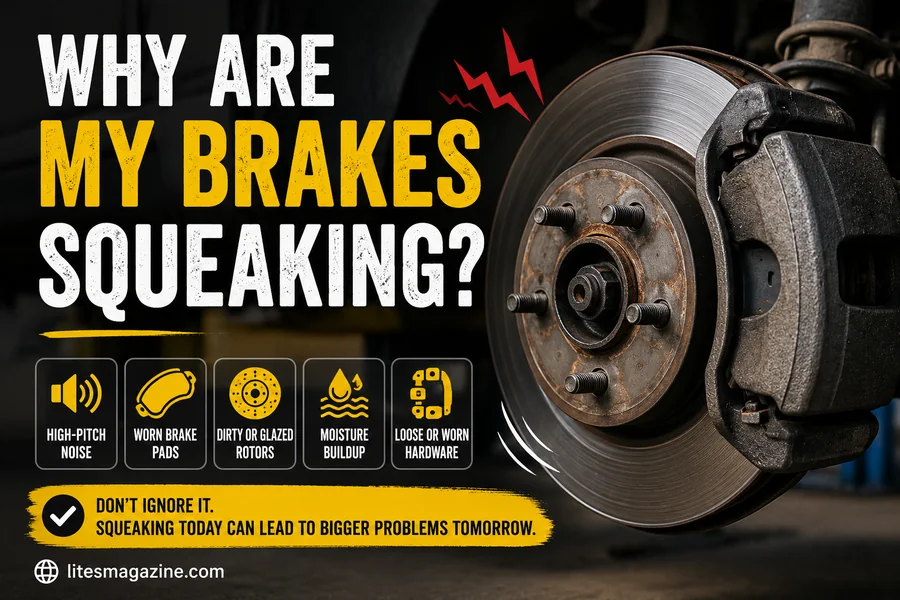
You back out of the driveway. You tap the brakes. And there it is — that high-pitched squeal that makes everyone within 30 feet look your way.
If you have ever asked yourself “why are my brakes squeaking” you are not alone. It is one of the most searched car questions on the internet. And for good reason. That sound can mean nothing. Or it can mean something expensive is about to break.
The thing is most people hear a squeak and either panic or ignore it completely. Both reactions miss the mark. What you actually need is to understand what is causing it. That way you know if it is a quick fix or a trip to the shop.
This article breaks it all down. No guesswork. No fluff. Just straight answers.
Why Are My Brakes Squeaking? 7 Common Causes
Brake noise happens for a handful of reasons. Some are harmless. Some are your car trying to tell you something important. Here are the most common causes for “why are my brakes squeaking”-
1. Morning Moisture on the Rotors
This is the most common and least serious cause. Overnight moisture from dew or rain forms a thin layer of rust on your brake rotors. When you first apply the brakes that moisture scrapes off. It creates a brief squeak or grinding noise.
It usually goes away within a few stops. If the sound disappears after driving for a minute or two you have nothing to worry about.
2. Worn Brake Pads
Brake pads have a small metal piece called a wear indicator. It is there on purpose. When the pad material gets thin this metal tab starts touching the rotor. That contact creates a loud squealing sound.
This is your car giving you a warning. It means the pads need replacement soon. Do not wait too long or you risk damaging the rotors which costs a lot more.
3. Dust and Debris Buildup
Brake dust collects between the pads and rotors over time. Road grit and small particles can also get trapped in there. When you press the brake pedal those bits of debris vibrate and cause squeaking.
A good cleaning or a few hard stops can sometimes clear it out. But persistent noise from debris may need a professional inspection.
4. Glazed Brake Rotors or Pads
Glazing happens when brake pads or rotors overheat. The surface hardens and becomes smooth. That slick surface reduces friction. It also creates a squealing or squeaking sound every time you brake.
This usually happens after heavy braking like going down a long steep hill. It can also happen from cheap brake pads that are more prone to overheating.
5. Low-Quality Brake Pads
Not all brake pads are the same. Budget options often have higher metal content. That extra metal rubs directly against the rotor and makes noise. Semi-metallic pads are especially known for this.
Ceramic pads tend to be quieter. They cost a bit more but they last longer and produce less dust.
6. Sticking Brake Caliper
The caliper squeezes the brake pad against the rotor. If it gets stuck or does not release properly the pad stays in contact with the rotor even when you are not braking. That constant friction causes squeaking or a burning smell.
This one is more serious. A sticking caliper can cause uneven pad wear and overheat your braking system. Get it checked if you notice the noise happening without pressing the brakes.
7. New Brake Pads Need Break-In
Brand new brake pads sometimes squeak for the first 100 to 200 miles. This is called the bedding-in period. The pad material needs time to transfer an even layer onto the rotor surface.
If you just had new pads installed and you hear some noise give it a few days. It should settle down. If it does not go back to the shop.
Read More: Why Is My Phone On SOS?
When Should You Actually Worry?
Not every squeak is a crisis. But some sounds should not be ignored. Here is how to tell the difference.
| Sign | What It Means | Action Needed |
| Squeak only in the morning | Moisture on rotors | None. It clears on its own |
| Constant squeal while braking | Worn pads or glazing | Schedule a brake inspection |
| Grinding metal sound | Pads are completely gone | Stop driving. Get it fixed now |
| Noise without pressing brakes | Sticking caliper | Get it checked right away |
| Squeak after new pad install | Normal break-in period | Wait 100 to 200 miles |
| Burning smell with noise | Overheating brakes | Pull over and let brakes cool |
A good rule of thumb is this. If the sound goes away fast it is probably fine. If it sticks around or gets louder something needs attention.
How to Stop Your Brakes From Squeaking
Now that you know why brakes squeak here is what you can do about it.
Clean the brakes. Use brake cleaner spray to remove dust and debris from the rotors and pads. This is a simple first step that works more often than people expect.
Replace worn pads. If your wear indicators are making noise do not wait. Driving on worn pads damages the rotors. A $150 pad swap can turn into a $500 rotor replacement fast.
Upgrade to ceramic pads. If you are tired of squeaky brakes after every pad change try ceramic. They cost more upfront but they run quieter and last longer.
Check the calipers. Have a mechanic inspect your brake calipers for sticking or uneven wear. This is especially important if the noise happens when you are not braking.
Bed in new pads correctly. After getting new pads do a series of moderate stops from about 35 mph. Avoid hard braking for the first couple hundred miles. This helps the pads seat properly on the rotors.
Short Answers
| Question | Short Answer |
| Why are my brakes squeaking but pads are good? | Moisture buildup or dust and debris between the pad and rotor cause noise. |
| Is it safe to drive with squeaky brakes? | Brief squeaks from moisture are safe. Constant squealing means get them checked. |
| How much does it cost to fix squeaky brakes? | Brake pad replacement costs around $100 to $300 per axle on average. |
| Can I spray something to stop brakes from squeaking? | Brake cleaner or anti-squeal spray can help but will not fix worn pads. |
| Do ceramic brake pads squeak less? | Yes. Ceramic pads run quieter and produce less dust than semi-metallic ones. |
| Why do my new brakes squeak? | New pads need 100 to 200 miles to bed in and form proper contact. |
What Happens If You Ignore Squeaky Brakes?
This is where people get into trouble. It doesn’t sound very loud at all. So they put it off. Then the sound gets louder. From there it’s a grind. Then they’re considering an expense that’s three times as much.
The following steps are usually taken when a driver disregards the warning of brake squeaking:
- When the metal indicator of the pad wears out, squealing begins.
- The metal indicator becomes worn out, and grinding starts.
- Since metal-to-metal contact harms the rotor surface, the rotor will wear out prematurely as a result.
- The rotors should be resurfaced or replaced.
- The caliper and brake line may be damaged as well if it’s stretched too far.
If you catch it right away, you lose a pad. If you wait until step four or five, the cost of your vehicle could be $600-$1000 and up.
Read More Articles: Why Is Uhoebeans Software Update So Slow?
Quick Summary
So, why are my brakes squeaking?
Brakes squeak because of 7 main causes. Moisture on rotors. Worn pads. Dust and debris. Glazing. Cheap pads. Sticking calipers. New pads that are breaking in. The majority of causes can be easily resolved by simple maintenance. The secret is being able to tell when the squeak is benign and when it isn’t.
If it is a new or worsening sound, don’t wait! If you do a quick discovery, you could save hundreds down the road.
FAQs:
Q: Why are my brakes squeaking when I stop?
A: Worn brake pads or dust between the pad and rotor are the most common reasons.
Q: Can rain make brakes squeak?
A: Yes. Overnight moisture creates light rust on rotors that causes a short squeak.
Q: Should I replace squeaky brakes right away?
A: If the sound is constant or grinding, yes. Brief morning squeaks are normal and safe.
Q: Why are my brakes squeaking after replacement?
A: New pads need a break-in period of 100 to 200 miles before the noise stops.
Q: Do all brake pads squeak?
A: Not all. Ceramic pads are quieter than semi-metallic pads with higher metal content.
Read More Articles: Why Is My Computer So Slow?