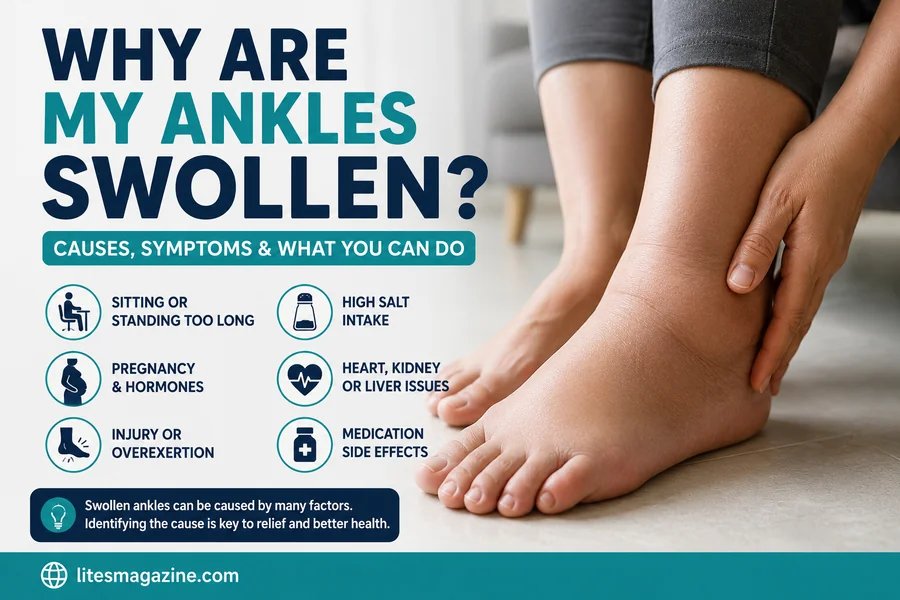
You looked down and saw your ankles look like another person’s. Puffy. Tight. Perhaps you are experiencing those dings and dangs in the socks that take forever to fade. You pick up your cell phone and ask yourself “why are my ankles swollen?”. Well, it’s just a little disturbing when your body does something unexpected.
Here is the thing. There are a lot of people with swollen ankles. As far as most of the time, it’s dull and correctable. Sometimes though, you’re waving a red flag to say something deeper needs to be addressed. Let me explain the true causes of this and what camp you are in.
What Actually Causes Swollen Ankles?
Doctors have a clinical term for it. Peripheral edema. Basically fluid gets trapped in the soft tissue around your ankles instead of circulating the way it should. That fluid has to come from somewhere and there are a bunch of reasons it ends up pooling right there at your feet.
1. You Have Been Sitting or Standing Way Too Long
This one is dead simple. Gravity pulls fluid downward. If you are parked at a desk for nine hours or standing behind a counter all shift your body just cannot keep up with moving that fluid back toward your heart. By 5 PM your ankles are twice their normal size. Sound familiar?
2. Too Much Salt in Your Diet
Salt is sneaky. You eat a big takeout meal or demolish a bag of chips and your body holds onto extra water to balance out all that sodium. Next morning you wake up puffy. Your rings feel tight. Your ankles look swollen. Cut back on the processed stuff for a couple of days and it usually sorts itself out.
3. You Hurt Your Ankle
A sprain or twist sends your body into repair mode fast. Fluid rushes to the injury site. That is inflammation doing its job. If you remember rolling or tweaking your ankle recently the swelling is your body trying to protect itself. Ice it. Rest it. Keep it elevated.
4. Pregnancy
Almost every pregnant woman deals with swollen ankles at some point. The baby is pressing on pelvic veins and hormones are telling the body to retain more fluid. Mild puffiness? Totally normal. Sudden extreme swelling especially with headaches or vision changes? That is a different conversation. Call your doctor right away.
5. A Medication You Are Taking
This catches people off guard. A lot of common medications list ankle swelling as a side effect. Calcium channel blockers for blood pressure are probably the biggest culprit. But steroids, certain antidepressants, diabetes drugs, and hormone therapies can do it too. Think about whether the timing lines up with a new prescription.
6. Venous Insufficiency
Your veins have these little one-way valves that keep blood flowing upward. Over time those valves can wear out. Blood starts sliding backward and pooling in the lower legs. This is called chronic venous insufficiency and it is one of the most overlooked answers to why my ankles are swollen. It is especially common as people get older.
7. Heart Trouble
Nobody wants to hear this one but it matters. When the heart struggles to pump efficiently fluid backs up in the system. The ankles and legs are usually where it shows up first. Both ankles swelling and getting worse as the day goes on then improving overnight is a classic pattern with congestive heart failure. Do not brush this off.
8. Kidney Problems
Kidneys are your body’s filtration system. When they start falling behind on their job excess fluid builds up. Ankle swelling paired with puffiness around the eyes or foamy urine can be early warning signs that your kidneys need some attention.
9. Liver Disease
In advanced liver disease the body produces less of a protein called albumin. Albumin is what keeps fluid inside your blood vessels where it belongs. When levels drop fluid leaks out into surrounding tissues. The result is swelling in the legs and sometimes the belly too.
Read More: Why Is My Scalp Tender in One Spot?
When Should You Actually Worry?
Most ankle swelling is not an emergency. But a few situations should get you moving toward a doctor fast.
One leg is swollen and the other is fine. Especially if it is red, warm, or painful. That could be a blood clot and you do not want to mess around with that.
You are short of breath. Ankle swelling plus breathing trouble is a combination that screams heart involvement.
The swelling does not go away overnight. Healthy bodies usually reset while you sleep. If your ankles are still puffy in the morning something systemic might be going on.
You are pregnant and the swelling came on suddenly. Preeclampsia is serious and it can escalate quickly.
Your skin stays dented when you press on it. Doctors call this pitting edema. It is worth getting checked out.
What You Can Do at Home Starting Today
If you’re looking to book a doctor appointment, do some basic first steps. They resolve the issue more frequently than it is generally believed.
Get your feet up. Seriously. Hold in the air for 15 or 20 minutes above the heart. Repeat a couple times during the day if possible. Elevation allows fluid to flow back to where it originated and gravity works both ways.
Reduce the salt intake. I know. Salt makes everything taste better. However, for most people, their difference will be seen if they remain below 2300 mg per day. Begin paying attention to nutrition labels and you’ll be amazed at how quickly sodium can pile up.
Walk more. Both your calf muscles work like pumps. Each step pushes blood up your veins. Any action that moves things around, even a walk around the office each hour is enough.
Try compression socks. They’re not reserved for grandparents just anymore. Graded compression stockings provide a gradual compression of your lower legs and prevent the accumulation of fluid. Perfect for long journeys, desk work or anyone who is on their feet throughout the day.
Drink more water. I know, it’s counterintuitive. You are swollen with fluid so why add more? When the body knows that water it has will not be needed again, then it won’t cling to it. Try to drink approximately 8 glasses a day.
Go easy on alcohol. Some alcoholic beverages can lead to dehydration and inflammation simultaneously. Ankle swelling is aggravated by both of them.
Read More: Why Do I Keep Getting Styes?
Swollen Ankles vs Swollen Feet
People mix these up all the time. They can overlap but they are not always the same thing.
| Causes | Swollen Ankles | Swollen Feet |
| Where exactly | Around the ankle bone and joint | Tops and soles of the feet |
| Usual causes | Vein issues, heart problems, meds | Standing too long, tight shoes, injury |
| Red flag signs | One-sided swelling that persists | Numbness, discoloration, sores |
| When both happen | Fluid retention, pregnancy, kidney or liver disease |
When both areas puff up together your doctor is more likely to investigate systemic causes like organ function.
What Will the Doctor Actually Do?
If you end up at a clinic expect a combination of these depending on your situation.
Blood work to check how your kidneys, liver, and protein levels look. A urine test to see if protein is leaking where it should not be. An ultrasound of your legs if they suspect a clot or vein damage. An echocardiogram to look at heart function. Maybe an X-ray or MRI if injury seems like the culprit.
Your doctor will piece together your symptoms, history, and test results to land on the real answer.
Short Answers
| Question | Answer |
| Why are my ankles swollen for no reason? | Usually caused by salt intake, long sitting, medications, or vein problems you haven’t noticed yet. |
| Can dehydration cause swollen ankles? | It can. Your body hoards water when dehydrated which sometimes shows up as ankle puffiness. |
| Should I worry about swollen ankles? | Occasional mild swelling is usually fine. Ongoing or one-sided swelling deserves a doctor visit. |
| How do I reduce swollen ankles fast? | Elevate your legs, drink water, skip the salt, and put on compression socks. |
| What deficiency causes swollen ankles? | Low magnesium, potassium, or albumin (protein) can all make your body retain fluid. |
| Do swollen ankles mean heart problems? | Sometimes. Both ankles swelling daily and improving overnight can point to heart failure. |
Why Are My Ankles Swollen Only in the Evening?
This one makes a lot of sense when you think about it. You spend all day upright. Gravity has been slowly dragging fluid into your lower legs for hours. By evening your ankles show it.
It happens more with venous insufficiency, salty diets, and jobs that keep you in one position. Sleeping with a pillow under your calves usually resets things by morning.
But here is the key detail. If your ankles are still swollen when you wake up, that is a different situation. Morning swelling hints that your body cannot clear the fluid on its own. Kidney issues and heart problems tend to show up this way. Worth mentioning to your doctor.
Bottom Line
So, why are my ankles swollen?
The ankles become enlarged due to the buildup of fluid in the wrong place. Sometimes it’s just a case of laying back and foregoing the fries. At other times it’s a message your body is sending you about your heart, kidneys, veins – something important.
Take note of the details. One ankle or both? Is it temporary or permanent? Is there pain? The clues are more important than you think.
Begin with the easy things! Move more. Hydrate. Watch your salt. If they help use compression socks. So, if the swelling persists or appears in conjunction with other symptoms make an appointment to have it examined. It’s better to know than guess.
FAQs:
Q: Why are my ankles swollen after sitting all day?
A: Gravity pools fluid in your lower legs when you sit for hours. Moving around or elevating your feet helps.
Q: Can blood pressure medicine make ankles swell?
A: Absolutely. Calcium channel blockers are especially known for this. Talk to your prescriber if you notice a connection.
Q: Is walking good for swollen ankles?
A: Very. Your calf muscles pump blood upward with every step which directly reduces fluid buildup.
Q: Why are my ankles swollen but nothing hurts?
A: Painless swelling often comes from too much sodium, medication side effects, or early vein insufficiency.
Q: How many days of swelling is too many?
A: If it lasts more than two or three days without an obvious reason go ahead and see your doctor.
Read More Articles: Why Do I Keep Sneezing So Much?