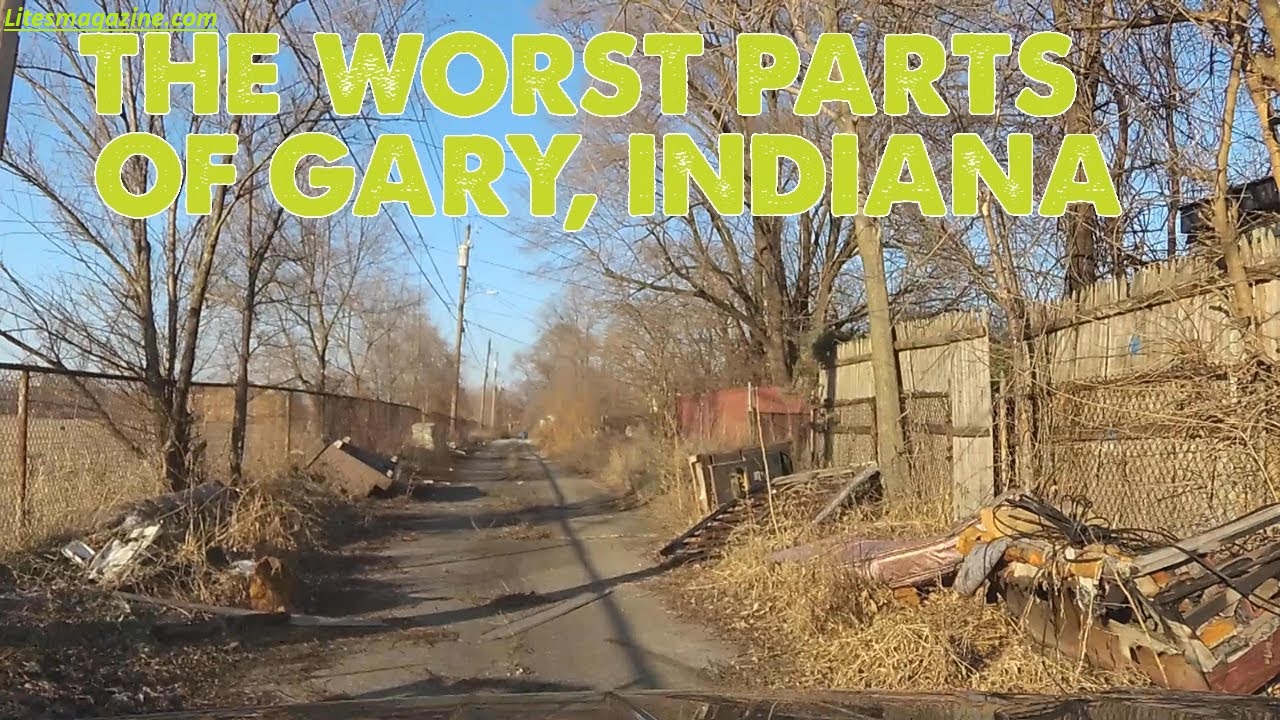
Why Is Gary Indiana So Dangerous? Gary, Indiana is considered dangerous mainly due to a mix of long-term economic and social challenges.
The city faced severe economic collapse after the decline of the steel industry, leading to high unemployment and a rising poverty rate. Over time, population decline left many abandoned buildings, contributing to urban decay.
These conditions are closely linked to higher crime rate, including both violent crime and property crime. While some areas have improved, certain neighborhoods still struggle with safety issues, which continues to shape Gary’s reputation today.
Table of Contents
Quick Table
| Factor | Key Insight |
|---|---|
| Crime Rate | Higher than U.S. average |
| Violent Crime | Elevated in certain neighborhoods |
| Property Crime | Theft and burglary common |
| Poverty Rate | Significantly above national level |
| Population Decline | Major drop since peak years |
| Economic Collapse | Loss of steel industry jobs |
| Unemployment | Higher than average |
| Abandoned Buildings | Contributes to urban decay |
| Police Efforts | Increasing but challenged |
| Safety Today | Mixed—improving in some areas |
What the Crime Statistics Say
When people ask why Gary, Indiana is considered dangerous, the first thing to examine is the crime rate. Statistically, the city has long reported higher-than-average crime levels compared to national figures.
However, raw numbers don’t tell the full story—context matters.
Crime in Gary is often concentrated in specific neighborhoods rather than spread evenly across the city.
Like many urban areas facing economic collapse and population decline, crime tends to correlate with poverty, unemployment, and lack of opportunity.
Recent reports show that while crime still exists, certain categories are stabilizing or improving due to increased policing and community programs. Still, both violent crime and property crime remain key concerns for residents and visitors.

Violent Crime Rate
The violent crime rate in Gary has historically been one of the main reasons for its reputation. This includes offenses such as assault, robbery, and homicide.
Compared to national averages, Gary’s violent crime rate has been significantly higher.
However, it’s important to understand that these incidents are often localized. Not every part of the city experiences the same level of danger. Many residential areas are quieter and safer than the statistics might suggest.
Contributing factors include poverty rate, unemployment, and limited access to resources—issues that commonly drive crime in struggling urban environments.
Property Crime Trends
Property crime—including burglary, theft, and vehicle-related offenses—is more common than violent crime in Gary. These crimes often stem from economic hardship rather than organized criminal activity.
The presence of abandoned buildings also plays a major role. Vacant properties can attract illegal activity, vandalism, and squatting, which increases overall crime perception.
Despite this, some neighborhoods have seen improvements through redevelopment efforts, better lighting, and increased police presence.
The Real Reasons Behind Crime
To truly understand why Gary faces safety challenges, you have to look deeper than crime statistics. The root causes lie in long-term structural and economic changes.
Gary was once a thriving industrial city, but over time, it experienced severe deindustrialization. This led to widespread economic collapse, job losses, and a shrinking population. As opportunities disappeared, social challenges increased.
The combination of high poverty rate, rising unemployment, and declining infrastructure created conditions where crime could grow. These factors didn’t happen overnight—they developed over decades.
Economic Collapse
Gary’s economy was heavily dependent on the steel industry. When that industry declined, the city faced a major economic collapse. Thousands of jobs were lost, leaving many residents without stable income.
This economic downturn led to increased unemployment, which is closely linked to higher crime rates. Without job opportunities, some individuals turn to illegal activities to survive.
The loss of industry also reduced city funding, affecting public services like education, infrastructure, and law enforcement—further contributing to urban challenges.

Population Decline
One of the most significant changes in Gary has been its population decline. Over the decades, the city lost a large portion of its residents as people moved elsewhere for better opportunities.
This decline had several effects:
- Reduced tax revenue
- Increased number of vacant homes
- Weakened community structures
A shrinking population often leads to less economic activity, which can worsen both poverty rate and unemployment. Fewer people also means fewer resources to maintain neighborhoods and prevent urban decay.
Abandoned Buildings
The rise of abandoned buildings is one of the most visible signs of Gary’s struggles. Empty homes and unused commercial spaces contribute heavily to urban decay.
These structures can become hotspots for:
- Illegal activity
- Drug use
- Vandalism
They also create a perception of danger, even in areas where actual crime may be lower. Addressing abandoned properties has become a key focus for local authorities aiming to improve safety and community morale.
Is Gary Still Dangerous Today?
The perception of Gary as a dangerous city still exists, but the reality is more nuanced. While challenges remain, the situation is gradually evolving.
Some neighborhoods have seen improvements due to redevelopment projects and stronger community involvement. Crime is not uniform across the city, and many areas are safer than commonly believed.
Recent Crime Trends
Recent data suggests that certain types of crime are stabilizing or even decreasing. Efforts to address violent crime and property crime are showing results in specific districts.
Community programs, youth engagement initiatives, and economic development projects are helping reduce crime drivers like poverty rate and unemployment.
However, progress is uneven, and some areas still struggle with higher crime levels.
Police Efforts
The local police department has increased efforts to combat crime through:
- Community policing
- Targeted patrols
- Collaboration with residents
These strategies aim to build trust and improve response times. While challenges remain due to limited resources, law enforcement continues working to reduce crime and improve safety.

Public Perception vs Reality
Gary’s reputation often paints it as one of the most dangerous cities in the United States. While there is some truth to its history, public perception can sometimes exaggerate the current situation.
Media coverage tends to focus on extreme cases, which can create a one-sided narrative. In reality:
- Crime is concentrated in certain areas
- Many neighborhoods are relatively stable
- Community efforts are making a difference
The image of widespread danger doesn’t always match everyday life for residents. Like many cities affected by deindustrialization, Gary faces challenges—but it’s not defined solely by crime.
Understanding the balance between perception and reality is key. The city is working toward recovery, and progress is happening, even if it’s gradual.
Is Gary Safe to Visit?
For visitors, safety in Gary depends largely on awareness and planning. Like any city, there are areas that are safer than others.
Tips for visiting:
- Stick to well-known areas
- Avoid unfamiliar neighborhoods at night
- Stay informed about local conditions
Many parts of Gary are quiet and residential, and visitors often pass through without issues. The city also has historical and cultural significance worth exploring.
While the crime rate may be higher than average, that doesn’t mean every visitor will experience danger. Being cautious and informed goes a long way in ensuring a safe trip.

FAQ’s
Why is Gary, Indiana known for high crime?
Mainly due to economic collapse, poverty rate, and population decline.
Is Gary still dangerous in 2026?
Some areas are, but others are improving with lower crime trends.
What type of crime is most common?
Property crime is more common than violent crime.
What caused Gary’s decline?
Deindustrialization and loss of steel industry jobs.
Are there safe areas in Gary?
Yes, several neighborhoods are relatively safe and stable.
Conclusion
Gary’s reputation as a dangerous city didn’t happen overnight—it developed over decades of economic and social change.
The decline of industry led to economic collapse, rising unemployment, and a growing poverty rate.
These factors, combined with population decline and urban decay, created conditions where crime could increase.
However, the story doesn’t end there. Today, Gary is a city in transition. While violent crime and property crime still exist, efforts to improve safety and rebuild communities are ongoing.
Addressing issues like abandoned buildings and creating new economic opportunities are key steps toward long-term recovery.
The reality is more complex than the headlines suggest. Gary is not simply “dangerous”—it is a city facing challenges while working toward change.
Understanding this broader context helps separate myth from reality and provides a clearer picture of what’s really happening on the ground.