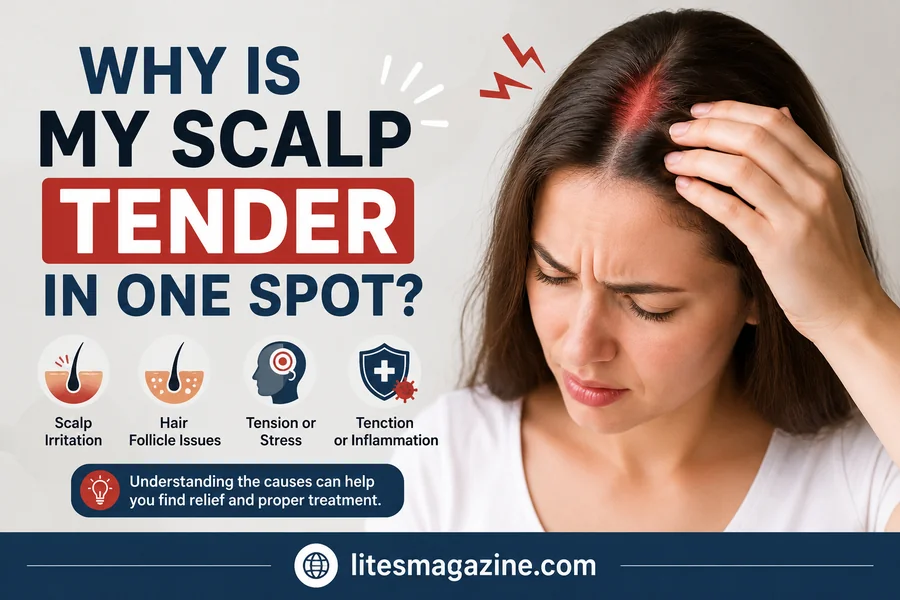
You lift up to touch your head — and there it is! One particular area that you cringe at. No rash, no apparent injury, no anything you can point to. It’s that annoying, persistent headache or itchy spot that occurs the next time you brush your hair or put your head on a pillow.
If you’ve been asking yourself why is my scalp tender in one spot, you’re in the right place. There’s nothing unusual about that. It’s a thing that occurs to a great deal of people, and the majority of the time it may be solved. However, “most of the time” is not “all of the time”, and knowing the difference is important.
Let’s get into it.
Why Is My Scalp Tender in One Spot?
In a nutshell, it is typically a localized issue – irritated follicles, a cyst, nerve pain or tension from the way you style your hair. It may also be a skin condition or allergic reaction to an item. In more unusual situations, it can indicate a problem which requires medical intervention.
The position, the quality of the pain and the presence of a bump all help to narrow it down quickly.
The Real Reasons Your Scalp Hurts in One Spot
1. A Cranky Hair Follicle (Folliculitis)
This is likely the most frequent. Folliculitis is just a fancy term for an infected or inflamed hair follicle. Bacteria (typically staph) enter the follicle and form one sore, tender bump directly at the base of one hair.
It is similar to a pimple on top of your head. There is a small white or red spot occasionally visible. But sometimes there are no signs, and it still hurts.
It can be caused by sweating under a hat, not washing after the gym, or scratching with dirty nails. Typically resolves with an antibacterial shampoo. If it is spreading or worsening after several days, then you need to seek medical advice for antibiotics.
2. A Cyst Sitting Under the Skin
Scalp cysts, also called pilar or epidermoid cysts, are very common and most people are unaware that they have them until the cysts become painful. They occur when the keratin or sebum becomes trapped beneath the skin in a small sac.
Your scalp may not appear unusual on the outside. If you touch the sore area, you’ll usually be able to feel a small lump which is firm, can be moved around and is painful when squeezed.
They are typically not harmful. The problem is when they become inflamed or infected (when a background ache turns into noticeable pain). If it’s bothering you, it can be drained or removed in a quick dermatologist visit.
3. Tight Hairstyles Pulling at the Same Spot
Tight ponytails, braids, slicked-back buns, weaves — they all work the same way. They put constant mechanical tension on the follicles in one specific area. Over time, those follicles get sore. Sometimes very quickly.
You’ll notice the pain eases within an hour or two of letting your hair down. That’s your body telling you exactly what the problem is.
This is the early stage of what dermatologists call traction alopecia. Catch it here and loosen your styles — you’ll avoid long-term damage. Keep ignoring it and you risk permanent hair loss in that spot.
4. Nerve Pain — Specifically Occipital Neuralgia
This one catches people off guard. Occipital neuralgia is a nerve condition where the occipital nerves — which run from the base of your skull up through your scalp — become irritated or compressed. The result is sharp, shooting, or burning pain that feels completely localized.
People describe it as electric shocks. Or like someone is pressing a hot wire into one patch of their head. Combing through that area can be unbearable.
It’s often linked to neck tension, poor posture, or an old injury. Warm compresses and stretching help mild cases. Severe cases sometimes need nerve block injections from a neurologist.
If your scalp pain feels like this — shooting and electric rather than dull and pressure-like — see a doctor. That distinction matters.
5. Scalp Psoriasis in a Single Patch
Psoriasis doesn’t have to cover your whole scalp. It can appear in one isolated area — red, raised, scaly, and tender to touch. The flakes look different from dandruff: thicker, drier, sometimes silverish.
The spot can itch or burn. Scratching makes it worse. And it tends to come and go — you’ll have flare-ups and periods where it calms down completely.
Medicated shampoos with salicylic acid or coal tar are usually the starting point. If those don’t move the needle, a dermatologist can prescribe topical steroids that work faster.
6. An Infected Cyst or Abscess
If you already have a scalp cyst and it gets infected, you’ll know. The pain goes from a dull ache to something that demands attention. The area becomes hot, swollen, and red. You might feel pus under the skin.
Don’t try to squeeze it. Seriously. Squeezing can push the infection deeper and make it significantly worse.
A doctor will drain it safely — it’s a quick procedure — and prescribe antibiotics if the infection has started spreading. This one isn’t a wait-and-see situation.
7. A Reaction to Something You Put on Your Hair
Hair dye. Dry shampoo. A new conditioner. A clip that sits in the same spot every day. Any of these can trigger contact dermatitis — an allergic or irritant reaction that makes your scalp burn, itch, or feel raw in one specific area.
The timing is your biggest clue. Did the pain start after you changed a product? After a salon visit? That’s not a coincidence.
Stop using whatever you changed. Rinse well with plain water. A little hydrocortisone cream can calm the inflammation. Going forward — patch test new hair products on a small area before full application.
8. Stress (Yes, Stress Can Do This)
When you’re under real stress, your body does some unhelpful things. The muscles around your scalp and neck tighten. Blood flow to the scalp gets restricted. And in some people this produces a condition called scalp allodynia — where the scalp becomes hypersensitive, and even light touch causes pain.
This often runs alongside migraines. If you notice the tenderness showing up before or after a bad headache, that connection is worth mentioning to a doctor.
Managing the stress itself — sleep, exercise, reducing load — is the real fix here. Scalp massage helps a lot too.
Read Also: Why Does My Eye Hurt When I Blink? 8 Causes Most People Miss
Match Your Symptom to a Likely Cause
| What You’re Feeling | What’s Probably Going On |
| Pimple-like bump at the pain site | Folliculitis |
| Movable lump under the skin | Scalp cyst |
| Pain only when your hair is tied up | Traction from tight hairstyle |
| Shooting or electric-shock pain | Occipital neuralgia |
| Scaly, flaking skin at the sore spot | Scalp psoriasis |
| Hot, red, swollen area | Infected cyst or abscess |
| Pain started after a new product | Contact dermatitis |
| No visible sign, stress is high | Muscle tension or scalp allodynia |
What You Can Try at Home
Apply warm compress — Use warm water on a cloth and apply to the painful area for 10-15 minutes. It helps to decrease swelling and promotes circulation. Good initial point for nearly any cause.
Tea tree oil shampoo — Has real antimicrobial properties. Helpful if the problem is folliculitis or building up of the scalp. Don’t use tea tree oil directly on the skin, it should always be diluted or incorporated into a formulated shampoo.
Scalp massage — Use your fingers (not your nails) and massage gently in circles around the sore area. If it has a bump or infection, do not apply direct pressure. It is most helpful for tension-related pain.
Go fragrance-free for a week — Swap your shampoo for a basic, fragrance-free, sulfate-free option and see if things settle. Simple but frequently effective.
Step back from the tight hair — If you do wear tight hairstyles on a regular basis, then take a few days off. Allow all follicles to regenerate. If it does relieve the pain, you have your answer.
When to Stop Waiting and See a Doctor
Home remedies work for mild cases. They don’t work for everything. Go see a doctor if:
- The pain is getting worse instead of better after a few days
- There’s a lump that’s growing or feels very firm
- The area is hot, swollen, or leaking fluid
- You’re losing hair at the sore spot
- You have a fever or swollen lymph nodes
- The pain shoots down your neck or face
- It’s been two weeks and nothing has changed
A dermatologist handles most scalp issues. If nerve pain is the main complaint, a neurologist is the better call. Either way — don’t sit on it if those signs are there.
Quick Answers
| Question | Answer |
| Why does one spot on my scalp hurt to touch? | Likely a sore follicle, cyst, or localized skin infection causing that tenderness. |
| Can stress cause scalp tenderness in one spot? | Yes — stress tightens scalp muscles and cuts circulation, creating real localized pain. |
| Is a tender spot on the scalp serious? | Usually not. But if it’s persistent or growing, see a dermatologist. |
| What does a scalp cyst feel like? | A small, movable lump — soft or firm — often painless unless infected. |
| Can a tight ponytail make my scalp tender? | Absolutely. Constant tension on the same follicles causes soreness and inflammation over time. |
| Why does my scalp hurt in one spot but I see nothing? | Nerve sensitivity, early folliculitis, or muscle tension can cause pain with no visible sign. |
What Happens at the Doctor’s Office
Nothing dramatic. They will examine the area and feel it, ask about your symptoms and their timeline. They may take the time to get a swab to check for bacteria or fungus, or may refer you for a biopsy if anything looks unusual, or may prescribe a targeted treatment like antibiotic, antifungal, or a steroid cream.
It’s a straightforward visit for something that most doctors see regularly. It is not hysterical.
Read Also: Why Is My Wife Yelling at Me? It’s Not Anger, Here’s What’s Really Happening
The Bottom Line
So — why is my scalp tender in one spot? It’s usually something manageable; nine times out of ten, it is. A sore follicle. An irritating cyst in your body. Long hair that’s pulled back for too long.Too tight a hairstyle for too long. Relax your neck and scalp muscles.
If you listen to the tenderness, it will tell you a story: what it feels like, when it began, whether you can see or feel something. Use that information.
First try the simple things. If you don’t see any movement after two weeks, or if symptoms are increasing; seek advice. Early treatment of scalp conditions is extremely effective. The longer you take the better the recovery will be prolonged.
You know your body. When you think it’s not right, that’s right.
FAQs:
Q1: Why is my scalp tender in one spot?
A sore or tender spot on the scalp is usually caused by an inflamed hair follicle, a scalp cyst, nerve irritation, or tension from tight hairstyles. Contact dermatitis, scalp psoriasis, and stress-related muscle tension are also common triggers. The location and type of pain help identify the cause.
Q2: Why does one spot on my scalp hurt when I touch it?
Touching triggers pain when there’s localized inflammation, an infected follicle, or a cyst sitting under the skin. Nerve hypersensitivity can also make the scalp painful to touch even without a visible cause.
Q3: Can stress cause scalp tenderness in one spot?
Yes. Stress tightens the muscles around the scalp and neck and restricts blood flow. This can cause scalp allodynia — a condition where the scalp becomes hypersensitive and tender in specific spots, often linked to migraines.
Q4: Why does my scalp hurt in one spot but I see nothing there?
Nerve pain, early-stage folliculitis, and muscle tension can all cause localized scalp pain with no visible sign. Occipital neuralgia in particular produces sharp, electric pain in one patch of the scalp without any skin changes.
Q5: Is a tender spot on the scalp a sign of cancer?
Scalp cancer is rare and usually appears as a visible growth, sore, or lesion that doesn’t heal. A tender spot alone is almost never cancer. However, if a lump is growing, bleeding, or not healing after weeks, see a dermatologist to rule it out.
Q6: Can a tight ponytail cause scalp tenderness in one spot?
Yes. Wearing your hair in the same tight style repeatedly puts constant mechanical stress on the same follicles. Those follicles become sore and inflamed. This is the early warning sign of traction alopecia — which can cause permanent hair loss if ignored.
Read More Articles: Why Are My Ears Ringing? Causes, Fixes, and When to See a Doctor