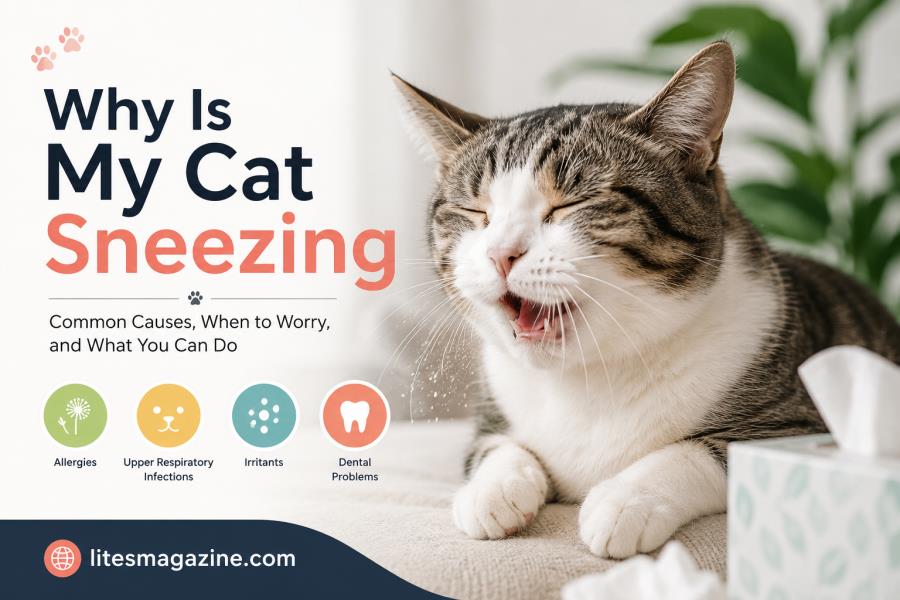
If you are reading this, your cat most likely has sneezed a string and you are spiraling. I get it. If you sneeze once, it’s a laugh. Five in a row in the early hours of the morning? Now that’s something to think about. So why is my cat sneezing — and should you actually be concerned about it?
Here’s the deal. There are various reasons for cats to sneeze. There are some boring and harmless ones. Others required a veterinarian’s appointment yesterday. I will conduct myself through it all so you can understand what is happening with your cat and can save you from midnight scrolling of pet forums.
So What’s Behind All That Sneezing?
One sneeze does one thing. Expels irritants from your cat’s nose. It can be imagined as a mini reset button for the nose. After poking their face in a corner, a sneeze? Totally fine.
The problem comes in when it gets tough. If the sneezing doesn’t stop or your cat starts to do something weird — like running around with eyes streaming, weird discharge, not eating — your cat is telling you something bigger is going on.
Why Is My Cat Sneezing? 9 Reasons That Actually Matter
- They Caught a Cold (Upper Respiratory Infection)
This is the grand-daddy of them all. Most of these infections are caused by feline herpesvirus and calicivirus. They quickly passed from cat to cat. If you have recently had a cat boarded, adopted, or a new cat in the house, then this is at the top of the list.
The watery eyes, runny nose, loss of energy and lack of appetite will be noticed along with the sneezing.
Read Also: Why Do Dogs Snore? 7 Surprising Reasons Every Owner Should Know
- Allergies Are Real for Cats Too
Pollen. Mold. Your favorite lavender plug-in air freshener. All of this may not be good for your cat’s nose. If springtime brings on the sneezing or if the sneezing occurs immediately after the bathroom is cleaned, allergies should be considered.
- Something in the Air Is Bugging Them
This is one giant dusty litter. Whether it’s candle smoke, cooking fumes, perfume, or aerosol sprays, they have a different effect when seen at a distance from the nose. If your cat sneezes immediately after you light the candle, you’ve probably got the answer to the problem.
- Something Got Stuck Up There
Cats put their noses in their mouths. A grass blade, a crumb, a little bit of whatever, can get stuck in the nose. This causes sudden nonstop sneezing. It will probably not go away on its own and requires a vet to retrieve it.
- Bad Teeth (Seriously)
This catches people off guard. Upper tooth roots are infected and just adjacent to the nasal sinuses. If it gets infected in that part, sneezing begins. Foul breath, drooling or chewing with sneezing? Have teeth examined.
- Growths in the Nose
Nasal polyps or tumors develop in the nasal cavity which causes constant irritation. This is more common in older cats. Don’t sit on it, if you have blood in your discharge and the sneezing goes on for weeks. Get to a vet.
- Bacterial Infections Piling On
The virus causes a person to become less able to fight off infections. Bacteria invade and exacerbate the condition. That’s typically how bacterial infections occur in cats. The tell-tale sign is green or yellow discharge and there is usually a need for antibiotics.
- Fungal Infections
Not so common but they do happen. One of them is cryptococcosis that attacks the nasal area. Swelling of the face and persistent sneezing are a sign of this.
The air in your house is dry.The air in your home is dry.
During winter, the air is dried out by heating. My nose gets irritated when it is dry. This is typically taken care of by a humidifier in any room where your cat spends time.
Red Flags You Shouldn’t Ignore
Most sneezes are nothing. But pair them with any of these and you need to act.
| What You’re Seeing | What It Might Mean |
| Thick green or yellow discharge | Bacterial infection likely present |
| Blood when they sneeze | Could be polyps, a tumor, or injury |
| Refusing food | Upper respiratory infection or pain |
| Swollen nose or face | Possible fungal infection or abscess |
| Gunky or squinting eyes | Viral infection, probably herpesvirus |
| Sneezing going on 7+ days | Needs proper diagnosis |
| Struggling to breathe | Severe — get to a vet now |
Trust your gut on this. If something feels off, it probably is.
What Happens at the Vet
Your vet will do a physical exam first — nose, mouth, eyes, throat. Depending on what they find they might order:
- A nasal swab to check for viruses or bacteria
- Blood work to see the bigger picture
- X-rays or a CT scan for polyps, tumors, or stuck objects
- A full dental exam if tooth trouble seems likely
This stuff matters because treatment changes completely depending on the cause. Guessing at home only gets you so far.
How Treatment Usually Looks
| The Problem | What Fixes It |
| Upper respiratory infection | Rest, fluids, steam sessions, antivirals for bad cases |
| Allergies | Remove the trigger, possible antihistamines with vet guidance |
| Bacterial infection | Antibiotics from your vet |
| Fungal infection | Antifungal meds |
| Foreign object stuck in nose | Vet removal, sometimes under sedation |
| Dental disease | Extraction or dental procedure |
| Polyps or tumors | Surgery and biopsy |
| Dry air | Humidifier, better ventilation |
One thing I want to stress — never grab something from your own medicine cabinet for your cat. Tons of human medications are straight-up toxic to them. Always check with your vet first.
Simple Stuff You Can Do Right Now
Don’t wait until a diagnosis is made to improve your cat’s environment.
Switch your litter. Clay litters disperse a lot of dust. Paper or crystal litters are much nicer to smell.
Cease spraying things in the vicinity. All air fresheners, cleaning sprays, perfumes. Your cat inhales that at a much greater level than you do.
Use a humidifier. In particular during the winter months from November to March when the interior air becomes extremely dry.
Ensure that vaccines are current. Core vaccines are those that are provided to protect against the primary viruses which cause respiratory infections. Prevention is always better than cure.
Clean up and vacuum often. While it’s dull, it works. Homes that have pets tend to accumulate a lot of hair, dander and dust.
And it’s time to get rid of anyone who smokes inside. Long-term exposure to secondhand smoke results in chronic respiratory problems in cats.
Short Answers
| Question | Quick Answer |
| Why is my cat sneezing but acting normal? | Probably dust or mild irritants — nothing major if no other symptoms show up. |
| Should I worry about constant cat sneezing? | Once in a while is fine. Every day for a week? That needs a vet. |
| Will cat sneezing clear up without treatment? | If it’s from an irritant, yes. Infections usually don’t resolve alone. |
| Can I catch a cold from my sneezing cat? | No. Feline respiratory viruses don’t jump to humans. |
| What can I do at home for a sneezing cat? | Run a humidifier and ditch strong scents. Vet visit for anything persistent. |
| Do indoor cats sneeze more? | They can, because they’re exposed to more household chemicals and dust. |
Quick Note on Kittens
Kittens catch infections way easier than adult cats. Their immune systems aren’t fully built yet. Shelter kittens and those from multi-cat homes are at the highest risk. Frequent sneezing in a kitten — especially with any discharge or tiredness — needs a vet visit that same day if possible.
Read Also: Why Is My Cat Breathing Fast? 7 Warning Signs You Shouldn’t Ignore
Wrapping This Up
Why is my cat sneezing? Could be dust. Could be a virus. Could be that new air freshener you bought last Tuesday. Most isolated sneezes don’t mean anything at all.
But when it’s happening every day, when there’s gunk coming out of their nose, when they’re not eating right — that’s when you pick up the phone and call your vet.
Watch for patterns. Note the timing. That info is gold when your vet is trying to figure out the cause.
Your cat can’t tell you what’s wrong. But a sneeze is one way they’re showing you. Pay attention to it.
FAQs:
Why is my cat sneezing but acting normal?
Most likely dust, dry air, or a mild irritant tickling their nose. If your cat is eating, playing, and behaving like usual there’s probably nothing to stress about. Just keep an eye on it for a few days.
Should I take my cat to the vet for sneezing?
If it’s been going on for more than a week or you’re seeing discharge, blood, loss of appetite, or breathing trouble — yes. A one-off sneeze after sniffing something dusty doesn’t need a vet trip.
Can cat sneezing go away on its own?
It depends on the cause. If something in the air is irritating them and you remove it the sneezing usually stops. But infections rarely clear up without some kind of treatment. Don’t wait too long hoping it fixes itself.
Can I catch a cold from my sneezing cat?
No. The viruses that cause cat colds — feline herpesvirus and calicivirus — don’t spread to people. Your cat can’t make you sick and you can’t give your cold to them either.
What can I do at home for a sneezing cat?
Run a humidifier in the room they spend the most time in. Switch to a low-dust litter. Get rid of air fresheners and strong sprays. These small changes help a lot. But if sneezing keeps going after a week, call your vet.
Why is my kitten sneezing so much?
Kittens pick up infections fast because their immune systems are still developing. Shelter kittens and those from homes with multiple cats are at the highest risk. If a kitten is sneezing with any discharge or low energy get them checked that same day.